What changes when Codex ships from inside AWS?
OpenAI just put its Codex coding agent on AWS, inside the cloud where many teams already run their stacks. The browser is quietly absorbing JavaScript too, and the agents keep eating the rest of the work. A link-forward briefing.
About this issue
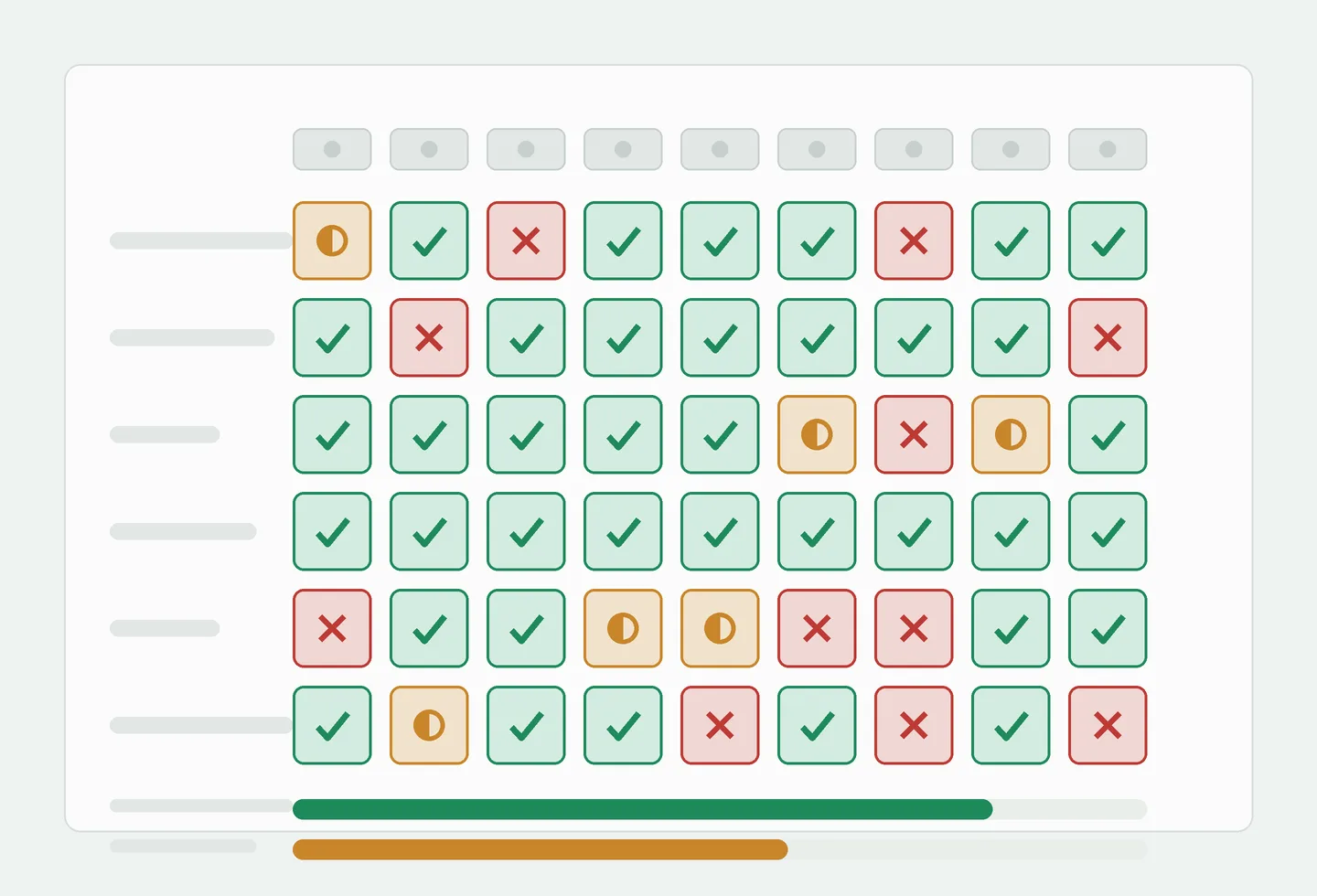
Feature descriptionA support matrix is the table web designers check before they ship: features run down the rows, browsers across the columns, and each cell says supported, partial, or missing. Sites like caniuse and the web.dev Baseline widget made it the standard way to answer one question fast: can I use this yet? Today the issue is that board. Each thing that shipped is a feature with a status pill, a support strip, and a usage bar, and the news is what just turned green.
Newly available
ToolingWhat turned green this week, in the model layer and in the browser.
Codex moves onto AWS
OpenAI made its frontier models and the Codex coding agent available on AWS, putting the same build-and-ship agent inside the cloud where many teams already run their stacks and their data.
Parallax with no scroll listener
A widely shared write-up rebuilds the classic parallax as a few declarative lines of CSS using scroll-driven animation timelines, replacing the per-frame JavaScript scroll handler with a single utility class that runs off the main thread.
More CSS reaches baseline
The wider pattern behind that demo: anchor positioning, @scope, conditional if(), and a typed attr() are landing as baseline features this year, which means layout and state work that once needed a wrapper library is now plain stylesheet code.
An agent that finds the bugs first
Anthropic expanded Project Glasswing to 150 more organizations after its frontier model surfaced more than ten thousand high or critical vulnerabilities across early partners, and says Mythos-class models are coming to all customers in the coming weeks.
How to use it
TechniqueReach for the platform before the dependency, and let the heavy work leave your JavaScript.
Declare a timeline, attach an animation
The reusable move is to name a scroll or view timeline and bind an animation to it, so motion is tied to scroll position by the browser instead of recalculated every frame. MDN documents the timeline properties and the small set of keywords you need.
Audit support before you add a library
Before pulling in a package for layout, scoping, or positioning, check the matrix: several of 2026's core CSS features now cover the cases those libraries used to handle, so the platform answer is often smaller, faster, and one less thing to maintain.
Borrow this
WorkflowA short routine for a week where both the browser and the agents are doing more of the build: write the rules once, let each layer do its own work, and keep a human on the diff.
One rules file
Commit a single agent-instructions file to the repo so every tool follows the same conventions. Stanford's CS336 now ships a CLAUDE.md to students, a sign the practice is becoming standard.
github.comThe platform first
Let CSS handle scroll, scope, and positioning before you add JavaScript or a dependency. The smallest correct answer is usually a stylesheet, not a package, and it ages better.
w3.orgA human on the diff
When an agent writes the code, keep a person on the merge, especially where auth and data meet. The same models that find ten thousand flaws can introduce them too.
anthropic.comRecreate this look
Prompt LabHand this to an AI design or build tool to rebuild today's Baseline support-matrix idiom.
Design a browser feature-support board, in the spirit of caniuse and
the web.dev Baseline widget, not a marketing landing page.

Layout:
- A top toolbar: left wordmark, a faux search field reading
  "search features", and a small right nav.
- A row of filter chips under the toolbar, with one active chip.
- A full-width feature-header band: an eyebrow label, a large
  headline, a one or two sentence deck, and a status row of pills
  (Baseline, Newly available) plus a horizontal usage-share bar.
- A full-width support-matrix card as the hero: a grid of status
  cells (supported, partial, missing) under neutral browser column
  headers, with a legend. No big photo hero.
- Content sections as table rows, not stacked hero cards: each row is
  a left status column (a pill plus a "since" tag), a middle column
  with a short heading and one or two sentences, and a right support
  strip of five small status squares, a usage bar, and a source
  domain.

Palette: cool spec paper (#EEF2F0), deep green-slate ink (#16211C),
one green accent (#1F8A5B) for links and the supported state, amber
(#B7791A) for partial, red (#BE3A34) for missing. Status colors are
functional only; no gradients on type, no glow, no neon.

Type: a clean grotesk (Sora) for headings, a highly readable
humanist sans (Public Sans) for body and UI, a reading italic (Lora)
for one editorial line, and a monospace (IBM Plex Mono) for labels,
status pills, and the legend.

Readability: body at least 18px, line height 1.6 or more, no
justified text, WCAG AA contrast, text never on a border. In the
matrix image use colored cells, checks, and bars only; no fake
readable text.
Why it works: it names a real web archetype, fixes the toolbar, the header band, and the row grammar, then translates the matrix into concrete components, palette, type, and accessibility rules, so a tool returns this issue's status-board look rather than a vague "make it look like a dashboard."
Bottom line
Field noteThe platform and the agents are both absorbing yesterday's hand-written code: the browser took the scroll listener, the model took the boilerplate. The durable skill is knowing what to hand to the browser, what to hand to the agent, and what still needs you.