Edition No. 040Tuesday 16 June 2026Agentic web designRead ~ 4 min
The acquisition
Your code editor now answers to a rocket company
SpaceX agreed to buy Anysphere, the company behind Cursor, for $60 billion in stock, folding the coding agent millions of builders use into Elon Musk's xAI. The same week, the craft conversation turned to what survives after the agent ships.
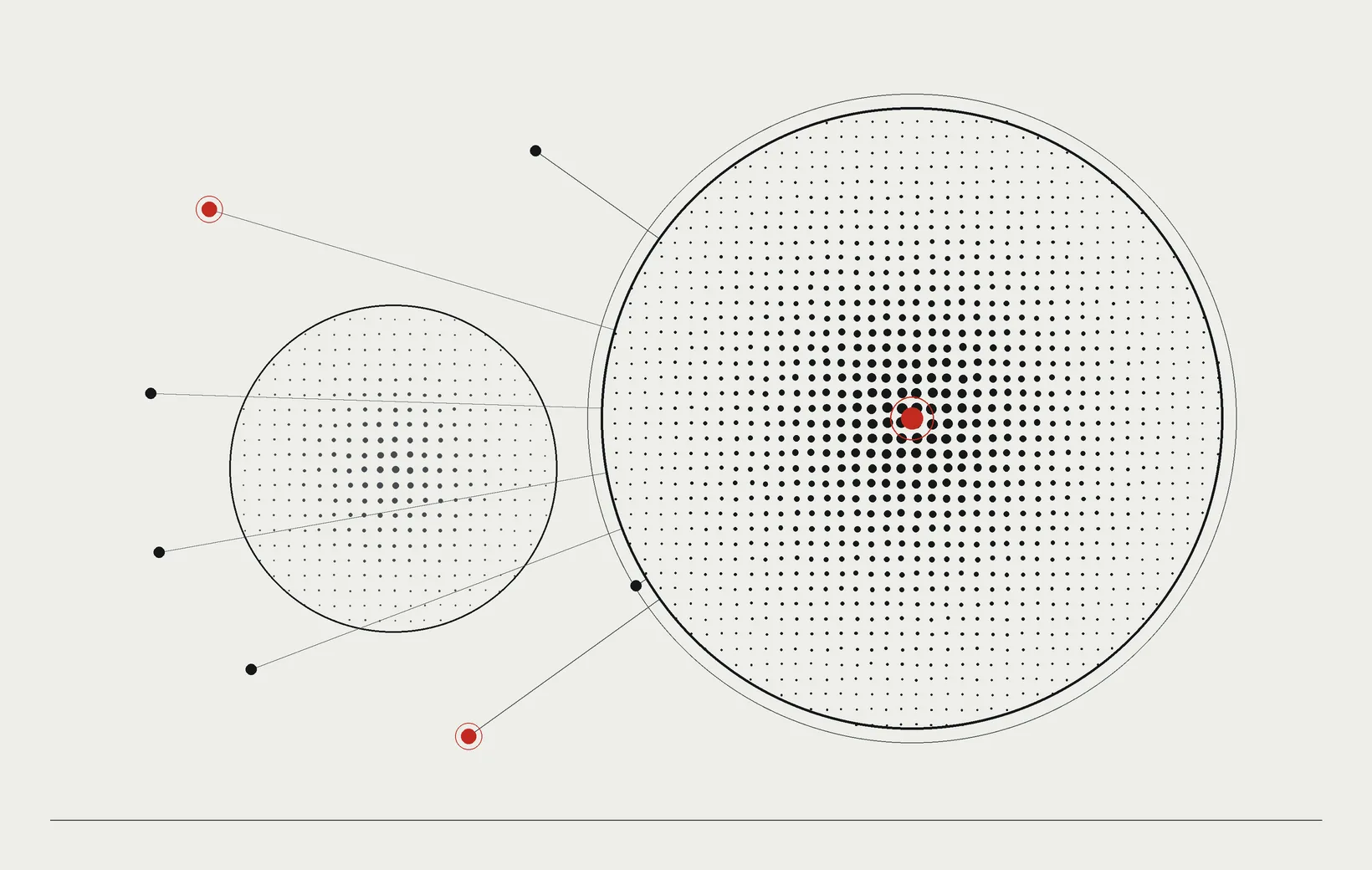
The agentic toolchain keeps consolidating: independent nodes pulled into one orbit.
SpaceX will acquire Anysphere, maker of the Cursor coding agent, in an all-stock deal it expects to close in the third quarter, after taking an option on the company in April. The purchase folds the editor many web builders now work in all day into xAI, the Grok maker that has trailed Anthropic and OpenAI on code.
For anyone who builds sites with an agent, the practical question is continuity: model routing, pricing, and data handling all sit with a new owner now, and a tool that felt like neutral infrastructure is suddenly a strategic asset for one company.
A VentureBeat piece makes a clean argument: prompts capture an engineer's intent for one conversation, so a vibe-coded system keeps the output and loses the reasoning, then stalls once nobody can hold the whole thing in their head. The fix it proposes is spec-driven development, pushing business rules, validation, and intent into versioned specifications the agent reads, so the knowledge becomes part of the system rather than scattered across chat logs and tickets.
Stack Overflow's latest argues that feeding agents cleaner context is only half the job, and the durable move is structuring the systems underneath. Its example is a semantic layer, GraphQL plus MCP, so an agent queries exactly the data it needs, which lowers token spend and narrows the paths an autonomous agent has to wander into data it should never touch.
It reads as the sober follow-on to the company's agent knowledge exchange: once agents can ask and answer at machine speed, the limiting factor moves from the model to the shape of the system around it.
Field note
Money is pouring into coding agents at the same moment the government is switching some of them off: the bypass that got Anthropic's Fable 5 pulled, the model builders lost access to days ago, turned out to be the words fix this code, according to the one outside expert who read the report. These tools are valued like infrastructure and regulated like munitions, both in the same week.
Prompt lab
Design a single web page styled as the front page of a broadsheet newspaper, used to present a short briefing of three linked stories.

Layout: a small monospace top bar with the publication name and nav. Below it a dateline strip, a thick top rule with a row of monospace cells (edition number, weekday and date, section, reading time). Then a masthead: a short red kicker, one large serif headline (this is the only display-size element), and a one or two sentence deck. Then a lead well: a two-column row with a framed halftone plate and its caption on the left, and a bordered fact box of label-and-value rows on the right. Then an art-direction note. Then the stories, each opened by a kicker line (a small red square, a role label like Tooling, and the source domain on the right), a serif headline that links out, and one or two body paragraphs. Close with a field note carrying one italic pull line, a prompt block, and a numbered references list.

Palette: cool newsprint ground #EDEEE9, deeper panel #E5E7E0, near-black ink #16181A, secondary #494C50, and one editorial red #C32A20 for rules, kickers, and links. Spot color only, near-monochrome otherwise. No gradients, no glow, no second accent.

Type: Libre Caslon Display for the headline and section headlines; Libre Caslon Text italic for the one pull line; Libre Franklin for body at 19px with line height 1.65; Spline Sans Mono for the dateline, kickers, labels, and the prompt block.

Components: dateline strip, halftone lead plate with caption, label-value fact box, kicker-led stories, hairline column rules between items, numbered references. Square corners; rely on rules and weight, not boxes, to separate. Keep the reading measure near 66 characters.

Guardrails: every text color meets WCAG AA on its real surface, small mono labels included. Hover and focus states with 140ms easing and a prefers-reduced-motion guard. No fake search field, toggles, or active filter pills. Any plate stays abstract, with no garbled text baked into the image.
Works in Beaver Builder AI, v0, Lovable, Cursor, and other prompt-to-page tools. Keep the palette and type lines as a reusable house style and the front page becomes a template.