A fresh Claude Code bug report, new AI coding playbook notes, and agent-ready templates all point at the same design problem: context boundaries need to be visible before anyone trusts the work.
WorkspaceMemoryOutputReview
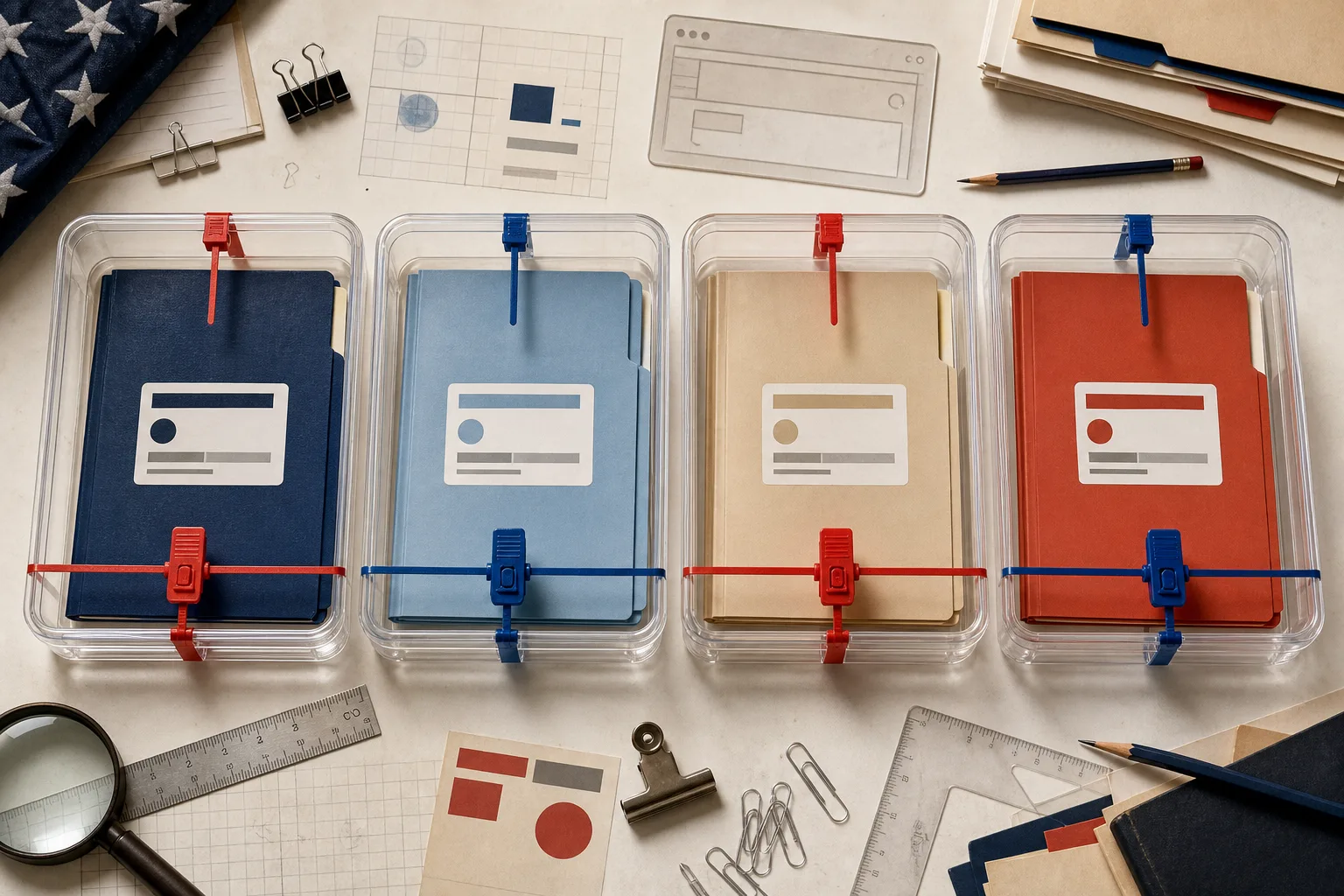
Generated editorial still life: separated folders, blank evidence cards, visible clips, no readable product text.
IntakeName the workspace before the agent begins.
SealShow what memory can cross the boundary.
ReviewExpose logs, diffs, and claimed sources.
ReleaseReturn approved output to the owning screen.
Today's Art Direction
A public-records inspection desk for making AI workspace boundaries visible and reviewable.
The page borrows from docket strips, quarantine trays, file pockets, evidence cards, and civic record desks. The borrowable pattern is the boundary tray: give each AI task an obvious container, show what can enter it, and make review the step before release.
Quarantine trayDocket stripChain of custodyCase pocketBoundary sealInspection tableReview stampEvidence card
Boundary table
ScopeWhich project, folder, repo, account, or client does this run belong to?
MemoryWhat prior context is allowed, and what has to stay outside the tray?
ProofWhich transcript, diff, screenshot, or test output proves the claim?
HandoffWhere does the accepted result land so the user can find it again?
A July 4 GitHub issue describes a Claude Code session that appeared to pull Minecraft-related context into an Enterprise workspace session. Treat it as a bug report, not a confirmed root cause, but the interface lesson is immediate: workspace isolation has to be visible enough for users to notice when it fails.
The report also mentions a confusing launch directory and a separate working directory. That is the kind of setup where a boundary tray, current scope label, and memory ledger would help before the model speaks.
Stack Overflow's July 2 Leaders of Code episode summarizes Snowflake's path from open experimentation to a shared vocabulary of AI design patterns. For web teams, the important move is from individual habit to named operating procedure.
Patterns such as planning in English, fencing off parallel agents, and updating shared skills all need UI surfaces. A playbook does more work when the product exposes its current step instead of hiding it in chat.
Dan Luu's long note on agentic coding was circulating on Hacker News today, and its practical thread is familiar to anyone shipping AI-built interfaces: plausible output is cheap, proof is not.
For design engineering, that means the page should reserve room for evidence. Test output, browser screenshots, and source links need a designed place beside the generated work.
A June 29 GitHub repo pitched on Hacker News today offers React, Vue, and HTML SaaS landing page templates meant to drop into Claude Code, Cursor, or Codex. The modest release says something about the market: agents are now a target runtime for page kits.
Templates help, but they also raise the review bar. If an agent starts from a kit, the final page still needs labeled provenance, edited copy, and a visible trail from prompt to shipped component.
Primary source: GitHub repo, 29 June
Borrow this pattern
Use a boundary tray when an AI feature touches private context, client work, or reusable project memory. Put the task scope, allowed context, output, and review proof in one visible container before the user accepts the result.
Where it works
Client portals, CMS edits, design-system changes, support triage, deployment reviews, and agency handoffs all benefit from this pattern. The tray turns trust from a hidden promise into a visible component.
Prompt Lab
Works in Beaver Builder AI, v0, Lovable, Framer, Figma Make
Create a responsive editorial web page using a Civic Evidence Desk archetype for an AI web design briefing about workspace boundaries. Build the first viewport as a public-records inspection desk: a docket-strip masthead beside a generated or composed bitmap of separated project folders in clear quarantine trays, with red and blue boundary seals, blank evidence cards, rulers, pencils, and warm paper texture. Use warm record paper (#F4EADB), navy ink (#17213A), federal blue (#4F78A6), inspection red (#B83A2E), brass folder tabs (#C8AA6A), and manila surfaces (#DFCAA8). Pair Fraunces for display and italic moments with Libre Franklin for body copy and IBM Plex Mono for docket labels. Mark news items as case pockets with a case number, linked headline, source date, and one or two readable paragraphs. Include a Design Move section that teaches the boundary tray pattern: scope, allowed memory, proof, and handoff all live in the same visible component. Keep body text at 19px or larger with line-height above 1.6, avoid fake readable text inside images, avoid neon or glow defaults, avoid fake controls, and include real hover and focus states with a reduced-motion guard.
Field note
Trust is easier to earn when the boundary has a shape. The agentic interface should show the tray before it asks the user to believe the recap.