Meter 02
Tooling
Items 03
An open source runtime that records a session end to end, then plays it back: browser steps, file writes, outbound requests, each tool invocation and approval. Workspaces sit behind ACLs, network access is policy-gated, and adapters cover the Claude Agent SDK, OpenAI Agents SDK, and Google ADK.
The developer who created JUCE, the audio application framework, shipped an AGPL coding workbench with a real GUI. Sessions are trees instead of one scrolling chat: sub-threads stay editable, tool calls open for inspection, and Miller columns carry the navigation. A different answer to the same question, which is how you see what your agent actually did.
The July production index from Vercel's AI Gateway reports open-weight models climbing to 29 percent of routed traffic while price per token flattens. Useful ambient data for anyone modeling what a harness baseline costs at scale.
Meter 05
Prompt Lab
Copy + paste
Hand this to an AI design or build tool to reproduce the day's art direction. The prompt carries the whole system, so it stands alone.
Design a single-page "home energy statement" for a modern utility brand,
as a shippable web page.

Archetype: an account statement page. A thin top nav, then a statement
header: supplier name in a wide grotesque, a document label, and a 4-column
account grid (statement number, read date, service, estimated read) set in
a tabular monospace with small uppercase labels.

Layout: hero splits 1.35fr / 0.95fr. Left, a large display headline and a
two-sentence deck. Right, a "meter readout" panel: inverted header strip,
one oversized monospace figure in the accent color, a small uppercase unit
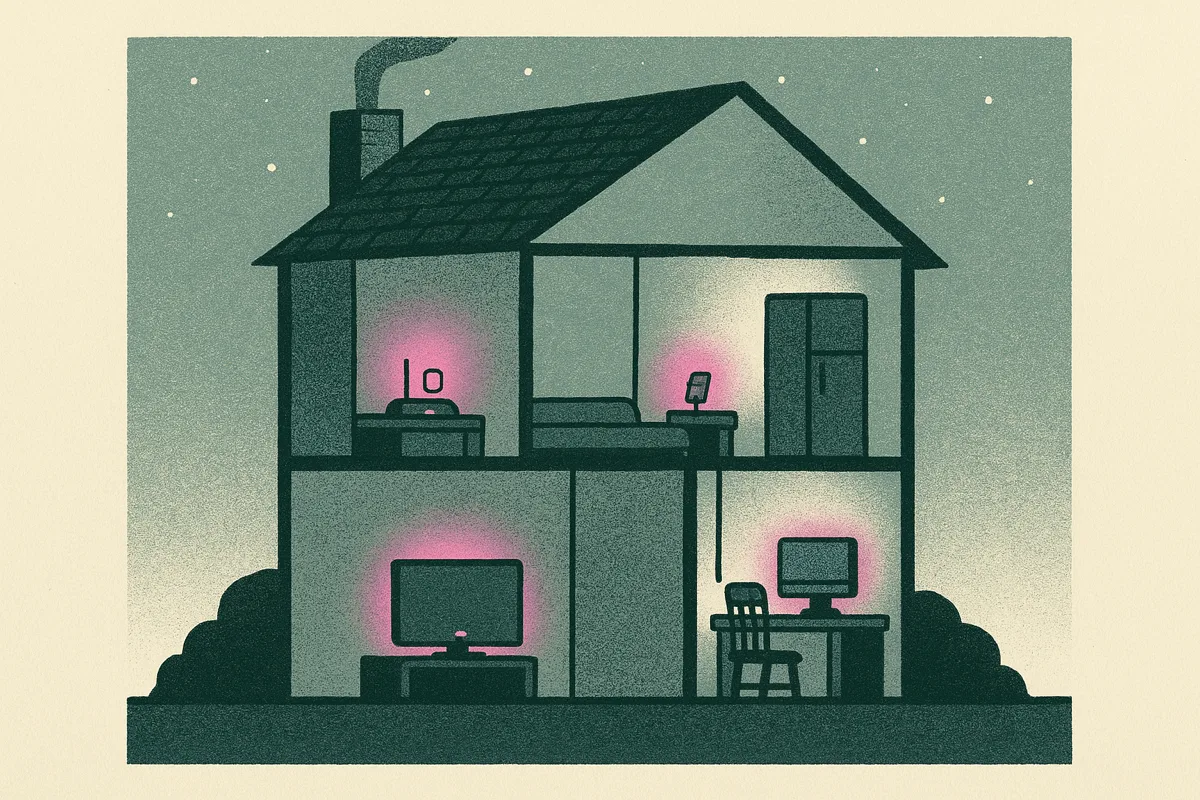
line, and a dashed-rule comparison row. Below it, a framed illustration
captioned as Fig. 1. After the hero, sections run as "meter readings": a
2px top rule, a small accent meter number, a bold section title, and a
right-aligned item count. The centerpiece is an itemized tariff table:
each row is label + tabular figure + an inline usage bar sized to the
value against the group maximum. Rates that do not fit the scale get a
rotated stamp chip instead of a bar.

Surface: warm off-white paper with wide pale sage green-bar stripes
(repeating background bands) and dotted tractor-feed perforation rails on
both page edges, hidden on mobile.

Palette: paper #F7F5EA, stripe #E4ECDD, ink #232B24, ledger green #3E5A45,
utility magenta #C2255F reserved for readings, bars, and key figures.

Type: Bricolage Grotesque (700/800) for the brand, headline, and section
titles; Public Sans for body text; Spline Sans Mono for every number,
label, and caption. Body at least 19px with 1.65 line height, max ~70
characters per line, never justified.

Guardrails: WCAG AA contrast for small text, including labels on green or
magenta; no gradients, no glow, no neon-on-dark; radius 0 to 3px, print
style; no fake toggles or dead search fields; hover states on real links
and rows at 120-180ms; respect prefers-reduced-motion; if the
illustration contains text it must be abstract or blank, never garbled
readable text.
Works in: v0, Beaver Builder AI, Figma Make, Lovable, Claude artifacts, Subframe.