Job No.069
DateWednesday, July 15, 2026
ClientAgentic Web Design
Time≈ 5 Min
Mechanical · Board 1 of 1 · Final Size 1240 px

265 million people just got a paste-up desk

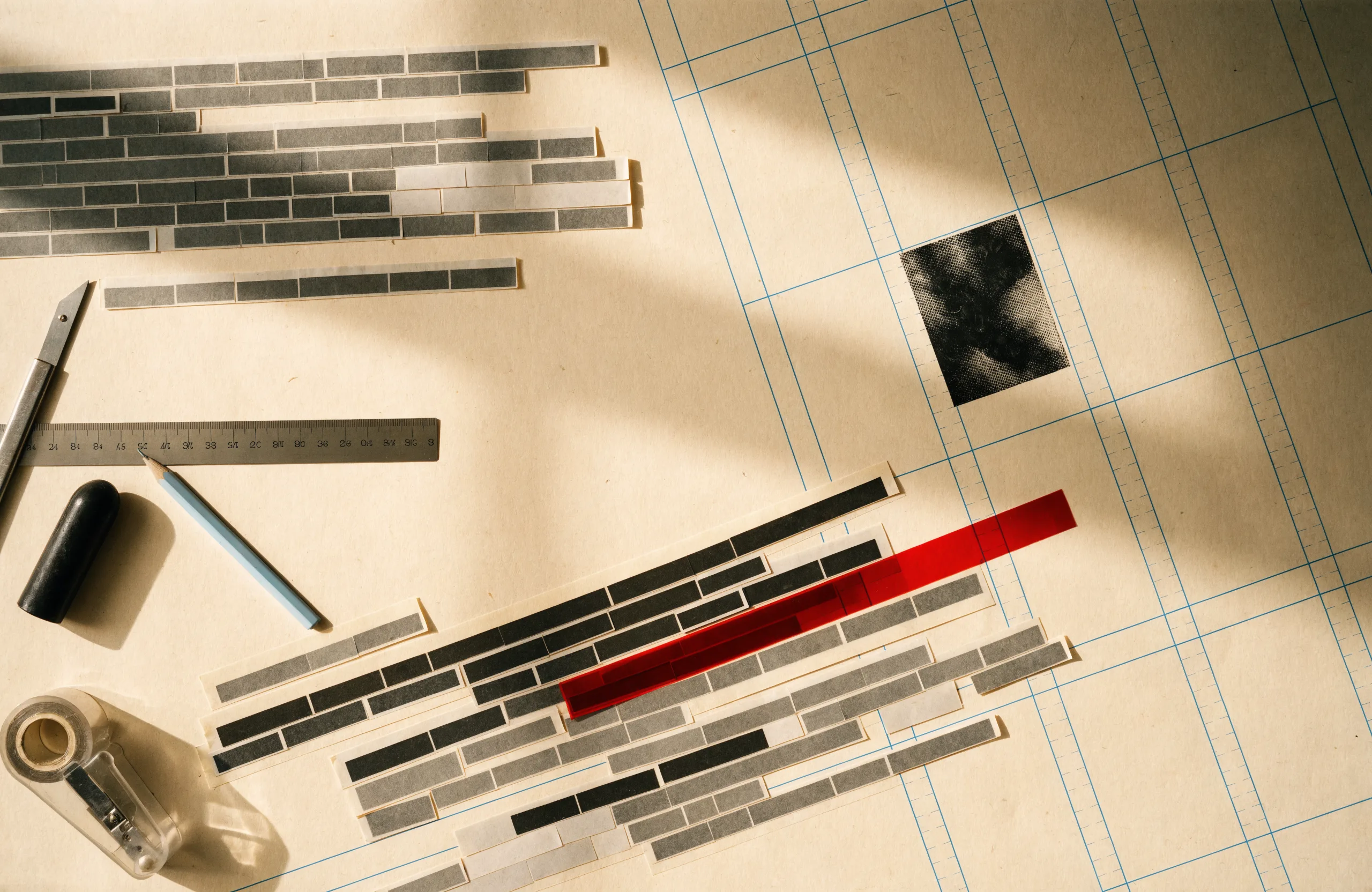
Overhead photograph of a paste-up desk: waxed galley strips of gray type, a knife, a steel ruler, a non-photo blue pencil, a tape dispenser, and a red rubylith strip on a cream board ruled in light blue.
Fig. 1 · FPO · Halftone 133 LPI · The paste-up room, c. 1978

Canva Code 2.0 turns AI-built sites into click-to-edit design objects, free plan included, and imports the HTML other tools generate. Nearly everything in today's docket is about the same seam: who finishes the machine's work, and with what.

Spec Card · Today's Art DirectionProof

The Paste-Up Room

A studio page assembled like a pre-digital mechanical board: machine-set galleys, hand placement.

Before desktop publishing, pages were assembled by hand. Type came back from the phototypesetter in long galleys, and a production artist waxed, trimmed, and squared each block onto an art board ruled in non-photo blue, a color the process camera could not see. Photos went down as FPO placeholders, red rubylith film masked the windows, and crop marks told the printer where the page really ended. The machine set the type; the board decided whether it was a page.

mechanical boardgalleynon-photo blueFPOrubylithcrop markswaxerkeyline
Galley A

Tooling

Rush
Canva · Released July 14

Canva Code 2.0 opens the finishing room to everyone

Canva shipped Code 2.0 on Tuesday and put it on every plan, free accounts included. The bet is not on generation speed, though it claims 75 percent of that too: it is that an AI-built site becomes an ordinary Canva design you can click into, retype, re-font, and drag images onto, the same way you would fix a slide.

The sharpest move is HTML import: pages started in other AI tools can be brought in as editable designs and finished here. VentureBeat's writeup has the numbers and the framing straight from Canva: the bottleneck was never producing the code, it was making the output presentable.

Show HN · July 15

A catalog of 93 design languages, written for agents

Agent's Design collects 93 named visual systems, each condensed into a copy-paste brief of palette, type pairing, and component grammar meant to steer Claude or Codex away from default styling. It reads like a type-specimen book for coding agents; the Show HN thread went up this morning.

Galley B

Technique

martinfowler.com · July 14

A DSL is a harness the model cannot slip

On martinfowler.com, Unmesh Joshi argues that domain-specific languages give LLMs the boundaries that prose specs never manage, walking through Tickloom, a DSL for distributed-system scenarios built with a model as the partner. The provocative part is the ending: the DSL, not the generated code, becomes the source of truth you keep.

GitHub · v0.1, on HN July 13

A language for code written by models, reviewed by people

Jacquard is a research language built for the regime where machines write most code and humans review it: effects, uncertainty, and program identity live in the syntax, so a reviewer can read one line and know what a program may actually do. Version 0.1 runs end to end and is honest about being a prototype.

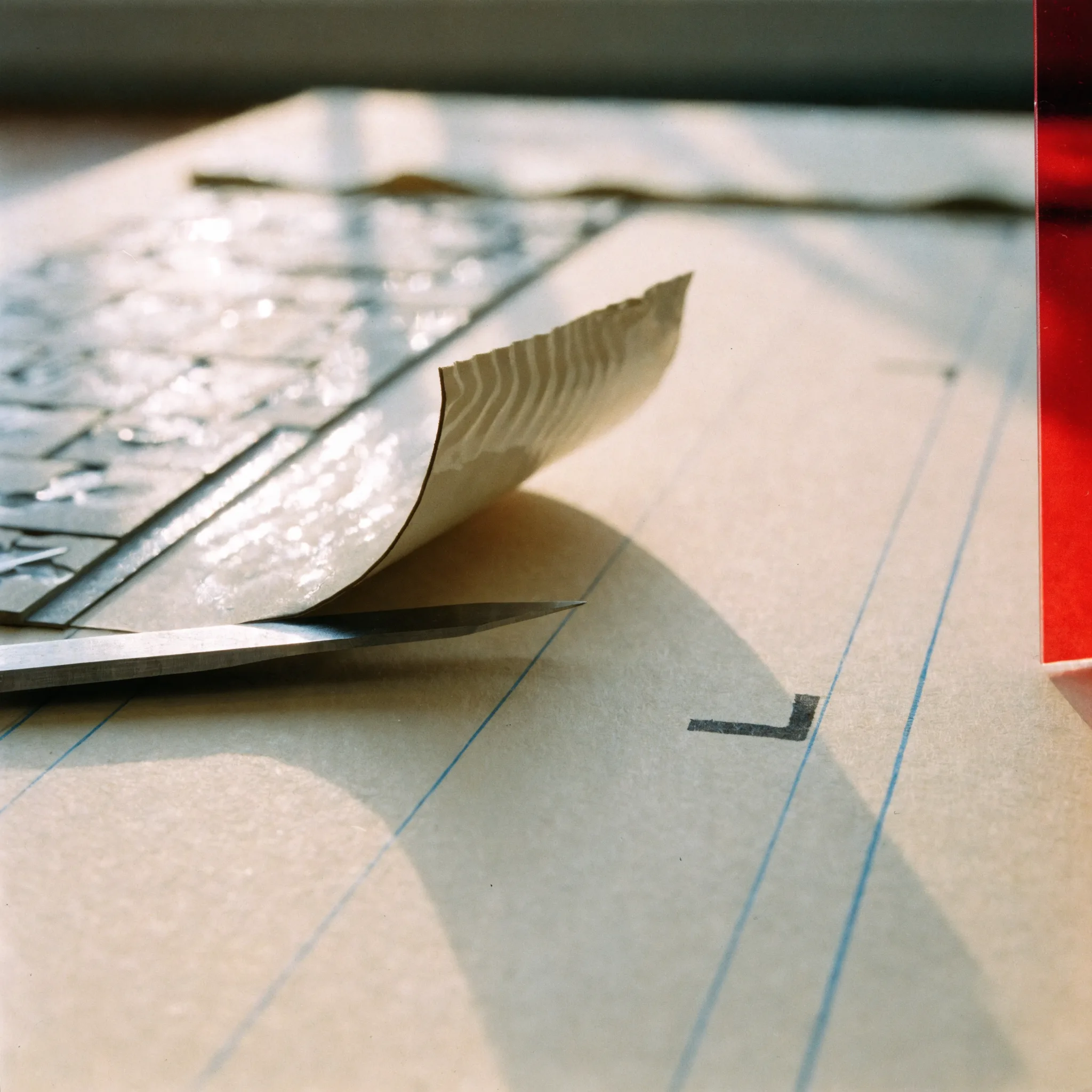
Close photograph of a knife blade lifting the curled corner of a waxed galley strip beside an inked crop mark on a cream board with light blue guides.
Fig. 2 · FPO · Detail · Lifting a waxed galley for correction
Galley C

Workflow

Smashing Magazine · July 15

The audience would like less of this, actually

Vitaly Friedman argues that most people do not want more AI features: adoption and retention run low, bolt-on AI pulls users out of their working context, and the cost of checking hallucinated output lands on them. A useful counterweight to every launch above, from a designer's side of the desk.

Keyline InstructionsBorrow This

Crop-mark framing

Frame sections with four short corner marks and one pale guide color instead of boxes and borders: an L-shaped mark at each true corner, hairline guides running behind the content, and an honest label where a border would have been.

Use it on portfolios, case studies, and studio sites, anywhere card chrome is crowding the content. Three constraints keep it from tipping into decoration: one guide color at low contrast, marks only at real section corners, and body text that stays dark, straight, and unrotated. The marks are a framing grammar, not confetti.
Order

Prompt Lab: Typesetting Order

OK to Print

A copy-paste order that rebuilds this board in the AI page builder of your choice. It specifies the board, not a picture of one.

Build a design studio landing page styled as a 1970s print-production
mechanical board, the paste-up room where machine-set type was finished
by hand. Canvas: warm cream art board #F1EBDC ruled with a few faint
non-photo blue vertical keylines #B7CDDC that run behind the content.
Ink text #211D16. Accents: process blue #3E6787 for labels and captions,
rubylith red #B5271D for small rotated proof stamps and one translucent
red film strip overlapping a photo, kraft tape tabs in muted gold.
Type: Ultra for the single display headline and section titles, Literata
for body text at 19px minimum with 1.7 line height, ragged right, never
justified, never rotated; Courier Prime in letterspaced caps for form
labels and captions. Layout: a ruled job-ticket masthead of form cells
(job number, date, client, time), then an asymmetric 12-column board
where content sits in mixed-width cream galley panels. Frame each panel
with four corner crop marks instead of borders; square corners
everywhere, no border radius, no drop shadows except a soft lift under
photo plates taped down with tape tabs and captioned FPO. Mark sections
with slug lines: a solid blue Courier tab like GALLEY A, the section
title, a hairline rule, and at most one red stamp. Keep contrast WCAG AA,
guides at low contrast behind text, no neon, no gradients, no glow, and
no fake readable text inside images.

Paste it into Beaver Builder AI or v0, into Figma Make or Lovable, into Claude Code or Framer AI.

Note

Production Note

Every story on this board sits on the same seam between machine output and human finish. The paste-up room had a job title for the person who owned that seam, and this week the tools started hiring for it again.