Art Direction Daily

State of Open ’26  A one-day summit on open-source AI

Open models took the majority.The gap reopened anyway.

Mozilla's first State of Open Source AI report counts a market that flipped: open-weight models now carry most OpenRouter traffic at prices down 50x in three years, while the frontier gap widens again.

Fri, July 17, 2026 One day, one stage Streaming everywhere See the program

Press

Issue
NO. 071
Date
Fri, Jul 17
Read
≈ 5 min
Outlet
Art Dir. Daily
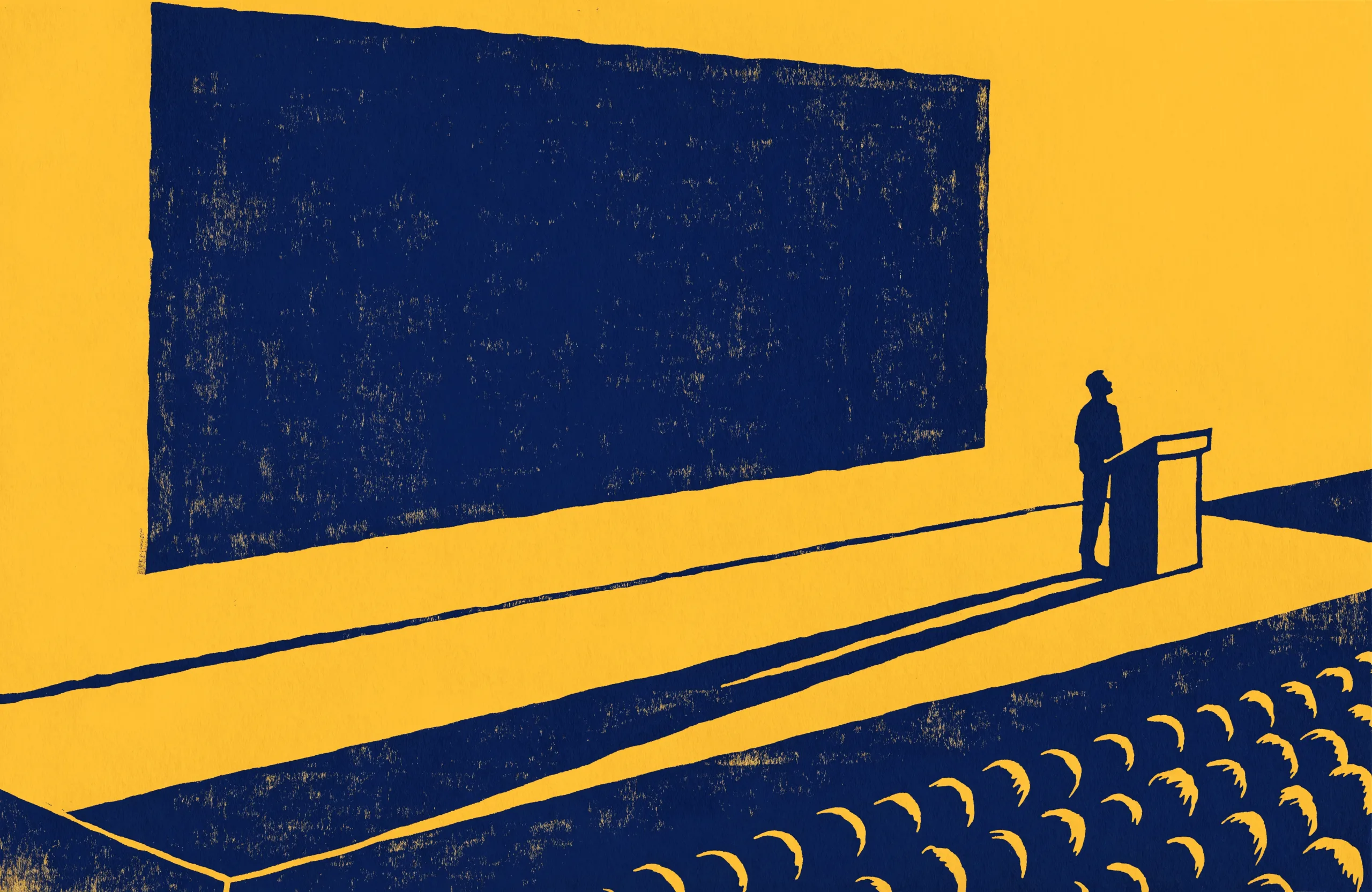
Two-ink screenprint of a summit keynote: a lone speaker at a lectern beside a huge blank indigo screen, rows of audience heads in the foreground, printed in indigo on marigold paper.
Opening plenary, Hall AScreenprint, two inks
09:00 Opening keynote

The open stack, finally measured

Mozilla published the first volume of The State of Open Source AI this week, built with SlashData on a survey of 1,410 developers across eight regions. The count settles a long argument: open-weight models grew from a rounding error to a third of OpenRouter token traffic by late 2025, and to a majority by mid-2026.

The room is not all applause. GPT-4-class inference fell from $20 to 40 cents per million tokens in 36 months, but the capability gap between open and closed frontier models, down to 0.5 percent in August 2024, had reopened to 3.3 percent by March 2026. Among teams that build with open models, 51 percent reach production; closed-model teams reach 63.

Majority

of OpenRouter tokens now run on open weights

50x

price fall for GPT-4-class inference in 36 months

3.3%

frontier capability gap, March 2026

1,410

developers surveyed with SlashData

All day Main stage

On the program

The report's featured stack, cast as today's lineup.

DeepSeek-R1

The open-weight reasoning model that raised $7.4B at a valuation above $50B.

Matched the frontier, Feb 2025

Qwen

Alibaba's open-weight family, a fixture of the report's model landscape.

Open weights

GLM

Zhipu's open-weight line, holding a seat at the frontier table.

Open weights

Mistral

Europe's open-model standard-bearer in the report's commercial chapter.

~$400M ARR

LangChain

The orchestration layer most builders meet first.

126K GitHub stars

Model Context Protocol

The connective standard of the agentic stack, per the report's harness chapter.

97M downloads
10:15 Sessions

Program

The rest of the day's news, scheduled.

Tooling

10:15Studio session

Design to production, no ticket

Figma's workflow lab walks through Make connecting straight to a GitHub repository: a designer branches the production site, fixes a date picker in place, annotates the aria-labels, and opens the pull request without leaving the canvas. The handoff ticket is the part that disappears.

10:45Lightning talk

One agent build, now a Slack app

Vercel's Chat SDK added a native Slack adapter: the same agent gets suggested prompts, streaming replies, and feedback buttons inside a workspace. Client work keeps growing surfaces beyond the landing page.

Technique

11:30Research briefing

2,000 sites, graded for answer engines

Webflow scored 2,000 US company sites for answer-engine readiness, and the median is rough: companies show up in 16 percent of AI answers about their own category and earn a linked citation 6 percent of the time. The blockers are things a web designer can actually fix. Sixty-two percent of sites carry broken internal links and 60 percent are missing basic SEO metadata.

Workflow

13:30Postmortem

When the tool answers its own questions

Olaf Alders traces how a July Claude Code release began answering its own clarifying questions after 60 seconds of inactivity, a default that arrived with no changelog entry. His post is a careful argument for pinning agent versions and auditing what your tools decide while you are away.

Survey Who holds which pass

Passes

Adoption shares among the 1,410 surveyed developers building AI features. Not prices: the doors are open.

Open pass

Build with open models. The largest camp in the survey, and the fastest growing.

Both passes

Half of developers hold both and route by task. The report calls the stacks complementary, not rivals.

Closed pass

Build with closed models. Still the more reliable road to production.

Fine print: 51 percent of open-model teams reach production, against 63 percent for closed. Admission is free; shipping is not.

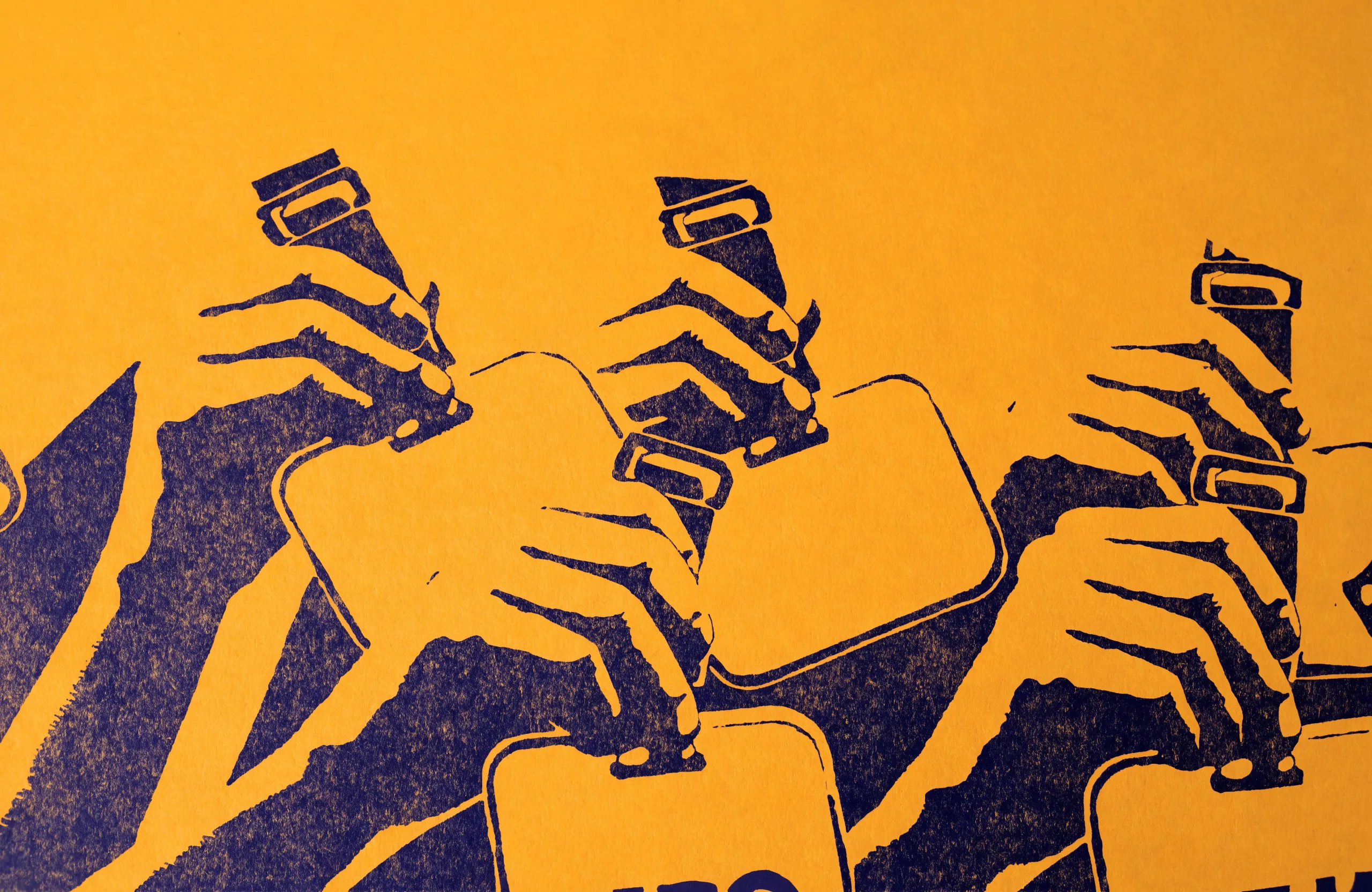
Two-ink screenprint close-up of raised hands holding blank conference badges on lanyards, printed in indigo on marigold paper.
Badge pickup, 08:30. Same print run as the plenary poster.

Today's Art Direction: The Summit Poster

An event launch page in two screenprint inks, marigold and indigo.

Event pages are one of the few briefs where loud is the requirement: one date, one place, one reason to click the button. The archetype runs on a fixed component set, a typographic lockup that treats the event name as the hero image, a timetable that gives every item a time, a speaker grid, tiered passes. Today's page borrows that whole set for a report launch and prints it in two inks, the cheapest confident palette screenprinting ever produced, with the badge masthead and outline numerals doing the ornament work.

Typographic lockup Lanyard badge Timetable rail Lineup grid Pass tiers Two-ink screenprint Outline numerals

Borrow this pattern

The timetable rail

Any list gains instant hierarchy when you dress it as a schedule: a monospaced time column as the marker, a small-caps track label as the category, the item title as the session. It works for feature lists, changelogs, onboarding steps, and launch roadmaps, because a time column gives readers an order without a single arrow or number badge. What keeps it honest: the times have to mean something, a real sequence, real dates, real durations. A schedule whose numbers are decoration reads as fake within seconds.

Take-home Prompt Lab

Build today's page

Paste into an AI builder to reproduce this visual system for a real event client.

Build a one-page conference launch site for an event called [EVENT NAME], [DATE], streamed online.

Art direction: a two-ink screenprint poster system. Ground the whole page in saturated marigold (#FDC137) with deep indigo ink (#101C4A) for all text, 3px rules, and borders. Warm off-white (#FFF6E0) panels for cards, one vermilion accent (#BF3512) reserved for time chips and the register button. No gradients, no glow, no rounded pills; corners stay sharp (0 to 2px).

Type: Clash Display (700) for an all-caps hero lockup and section titles; Schibsted Grotesk for body at 19px with 1.65 line height; Spline Sans Mono for times, labels, and metadata. The hero headline is the poster: stack two lines, the second line rendered as outline type with a 2.5px stroke and no fill.

Layout, top to bottom:
1. Top bar with wordmark and two links, 3px bottom rule.
2. Full-width typographic hero: mono kicker naming the event, giant two-line lockup, one short deck paragraph, then a boxed date rail (date, format, venue as bordered mono cells) ending in a solid vermilion register button. Hang a rotated press-badge card from the top edge on two angled straps: white card, 3px border, hard offset shadow, event metadata as label and value pairs.
3. A framed 21:9 illustration or duotone photo of the venue or stage, indigo on marigold only, with a mono caption row.
4. Speaker lineup: three-column grid of white cards, 3px borders, oversized display-type initials as portraits, name, one-line role, and a solid-indigo stat chip.
5. Program: sessions grouped under mono track headings, each row a 150px mono time column beside a display-type session title and one sentence, separated by thin gold rules.
6. Pass tiers: inverted solid-indigo band, three bordered cards with mono tier labels and huge display-type figures; highlight one card by flipping it to marigold. Close the band with a mono fine-print line.

Readability guardrails: body text at least 18px, line length under 70 characters, WCAG AA contrast on every label including text over the indigo band, descriptive link text, hover states on every link and card (150ms ease), and a prefers-reduced-motion guard. No fake readable text inside images, no emoji icons, no stock 3D blobs.

Works in v0, Lovable, Bolt, Figma Make, Beaver Builder AI, or any code agent.
Closing Field note

Event design usually sells scarcity: limited seats, early-bird deadlines. Open source AI runs the opposite promotion, and Mozilla's report reads like its box office. The doors are wide open; the fine print is about who makes it to production.