Art Direction Daily

No. 095  ·  Tuesday, August 11, 2026  ·  ≈ 4 min

Term prospectus · Eight sessions · Open enrolment

Figma's newest front door is somebody else's chat window

Weave tools now answer to Claude, Cursor, and ChatGPT through the Figma MCP server. Also in today's syllabus: Manus walks back out of Meta, and Vercel puts a real fence around the agent sandbox.

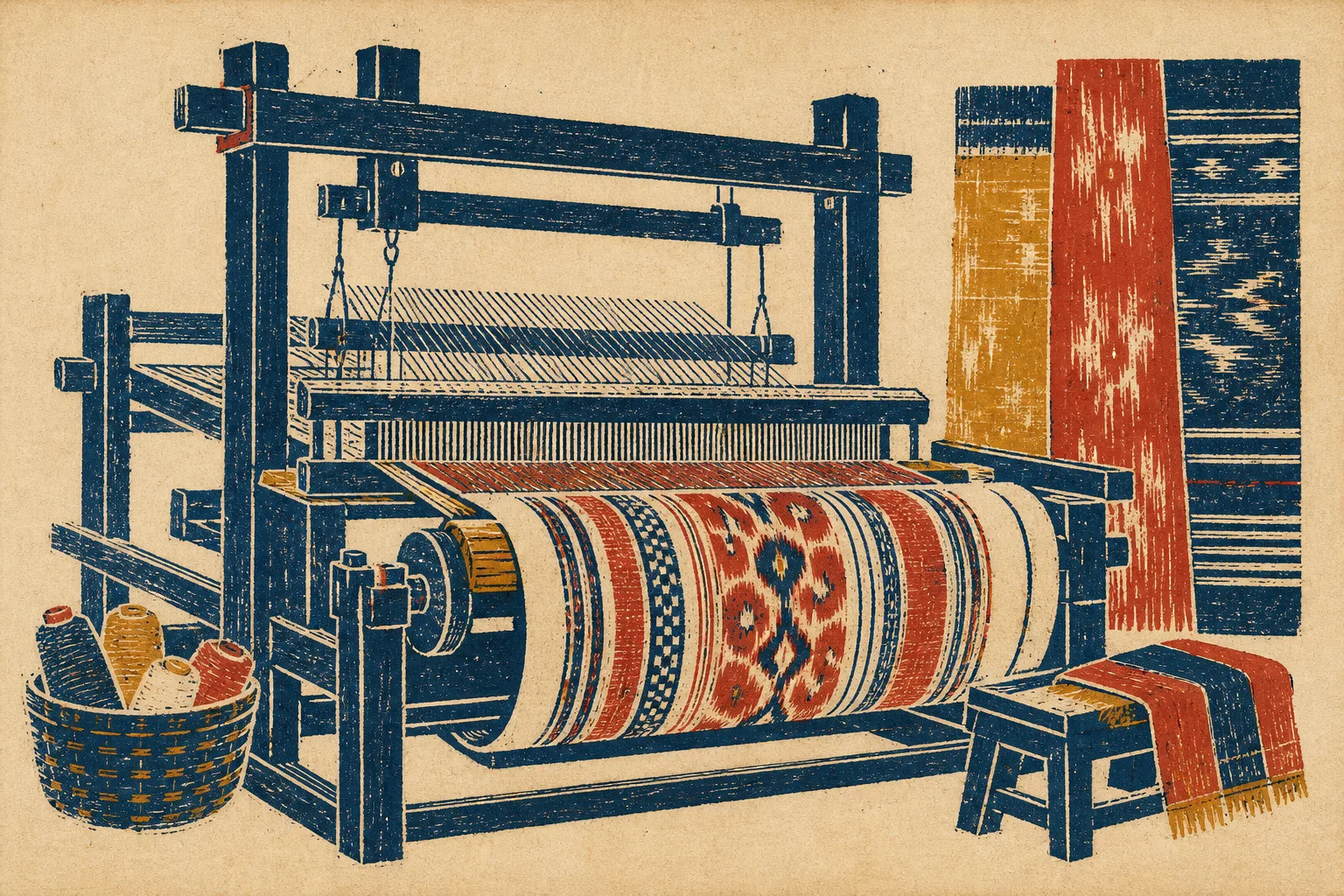
Woodblock print of a wooden floor loom with a patterned bolt of cloth rolling off its front beam, in indigo, madder red, and marigold on linen paper
Plate I · The mill floorWoodblock, indigo and madder on linen

Today's art direction

The Weaving School

A craft-school term prospectus set in block-print indigo, madder, and marigold on undyed linen.

Landing pages for schools and workshops usually chase software gloss. This one borrows its authority from the mill: a selvedge strip for a masthead, woodblock plates for imagery, syllabus rows stitched apart with dashed rules, and a ground that is literally woven from two crossed CSS gradients. The natural-dye palette carries the branding, with indigo for structure, madder for emphasis, and marigold for small marks.

Selvedge strip Block-print plates Syllabus rows Stitch rules Woven CSS ground Natural dyes Lot-number byline

Studio I · Tooling

Session 01

Weave tools, run from any chat

Figma's August 11 release notes wire Weave, the AI media pipeline built from last fall's Weavy acquisition, into the Figma MCP server. Describe the asset you need in Claude, Cursor, or ChatGPT and the agent picks the right Weave tool, runs it, and drops the result back into the conversation, with your prompts, reference images, and brand guidelines intact.

Session 02

Manus walks back out of Meta

Manus says it will return to operating as an independent company, seven months after Meta paid a reported two billion dollars for it and four months after Beijing ordered the deal unwound. The split has teeth: to satisfy regulators, data that affected users generated under Meta ownership gets deleted on August 23, and Reuters reports Tencent is in talks to become the largest shareholder.

Session 03

Vercel fences the sandbox

Vercel made its egress firewall standard on every Sandbox tier, arguing that compute isolation is only half a sandbox when injected instructions can still tell an agent to post your data somewhere. Traffic is denied by default per domain, and credentials are injected at the network boundary, so secrets never sit inside the VM the agent controls.

Session 04

A browser that budgets its tokens

Pickle is a desktop agent browser that condenses each page into a structured summary before it reaches the model, claiming up to a thirtyfold token saving, and it holds irreversible actions like checkout behind explicit approval. It runs on a bundled local model or your existing Claude or ChatGPT subscription over MCP.

Studio II · Technique

Session 05

An identity page agents can verify

Username.md sells one handle that renders as a page for people and as signed JSON or Markdown for machines, with Ed25519 signatures and DNS verification underneath. The service is brand new, but the pattern beneath it, a machine-readable profile the owner controls, maps cleanly onto the about page of any client site you build.

Session 06

Animation as a material

Smashing Magazine walks through building tactile interfaces with Lottie, treating motion as a designed material with weight and intent rather than a decoration pass at the end of a build.

Studio III · Workflow

Session 07

Tokens burned are not value shipped

On the Stack Overflow podcast, Coder's Rob Whiteley argues that token spend is a vanity metric for agent programs, and that release velocity and merged pull requests are the numbers that survive contact with Goodhart's law.

Borrow this pattern

The woven ground

Lay two hairline repeating gradients over one flat color, a vertical warp and a horizontal weft, and a flat brand page picks up the grain of cloth without loading a single texture file. Use it where large color fields feel airless: hero grounds, enrollment panels, footers.

Keep each thread a few percent opaque at most, and check text contrast against the finished surface rather than the base hex, so the texture never taxes reading.

.woven {
  background:
    repeating-linear-gradient(90deg,
      rgb(34 56 94 / .05) 0 1px, transparent 1px 7px),
    repeating-linear-gradient(0deg,
      rgb(34 56 94 / .04) 0 1px, transparent 1px 7px),
    #ede2c6;
}
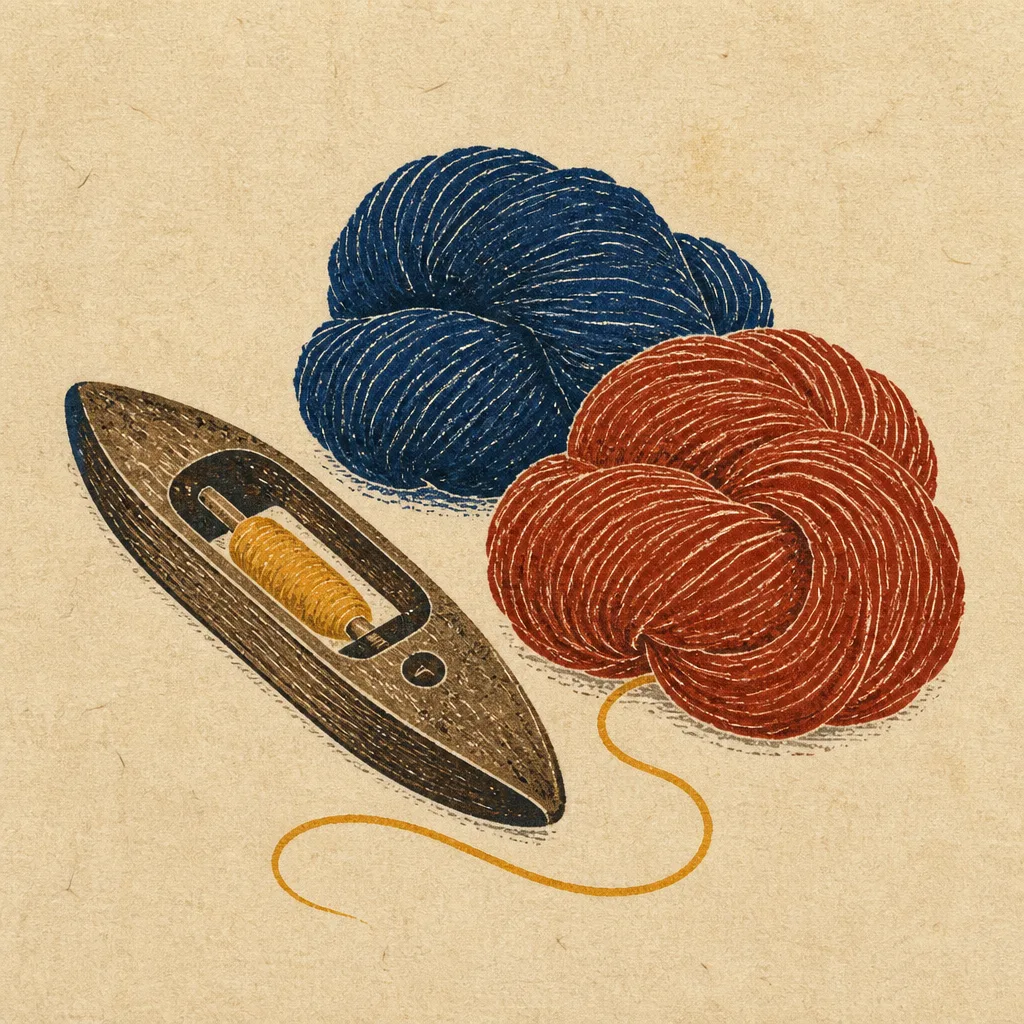
Woodblock print of a wooden weaving shuttle beside two skeins of yarn, one indigo and one madder red, with a marigold thread trailing between them
Plate II · Materials: shuttle and skeins

Prompt Lab · Take the pattern home

Recreate today's page

Paste this into your build tool of choice to reproduce the visual system, then swap the school for whatever your client teaches, makes, or sells.

Build a one-page term prospectus for a craft weaving school, art directed like a mid-century textile mill document. Ground: undyed linen #EDE2C6 with a woven texture made of two crossed hairline repeating-linear-gradients in indigo at 4 to 5 percent opacity; panels in lighter linen #F6EEDA with thin indigo rules. Palette: indigo ink #22385E for structure and body text, madder red #A2371D for emphasis and session numbers, marigold #B97F1D for small marks only. Type: Young Serif for the school name, headline, and course titles; Hanken Grotesk for body at 19px with 1.7 line height; Spline Sans Mono for uppercase labels. Components: a full-width selvedge strip under the nav built as a woven tape of indigo, madder, and marigold stripes; an inline lot-number byline instead of a boxed metadata table; a hero headline over a full-width framed woodblock-print plate; syllabus sections labeled STUDIO I, II, III with session rows separated by dashed stitch rules, each row carrying a mono session number, a serif course title, and two plain sentences; one pattern-draft card topped with a two-row checkerboard twill ornament; an enrollment panel holding the form. Guardrails: body text at least 18px at WCAG AA contrast against the textured ground, never justified; border radius 6px or less; no neon, no gradient fills as color, no glow shadows; no fake readable text inside images; hover states at about 150ms ease; include a prefers-reduced-motion guard.

Works in Claude Code, Beaver Builder AI, v0, Figma Make, and Lovable.
Field note

Weavy went from acquisition to a tool a chat window can operate in under a year. That is the pattern to plan around: any capability that matters will eventually grow a handle shaped like a conversation.

Sources