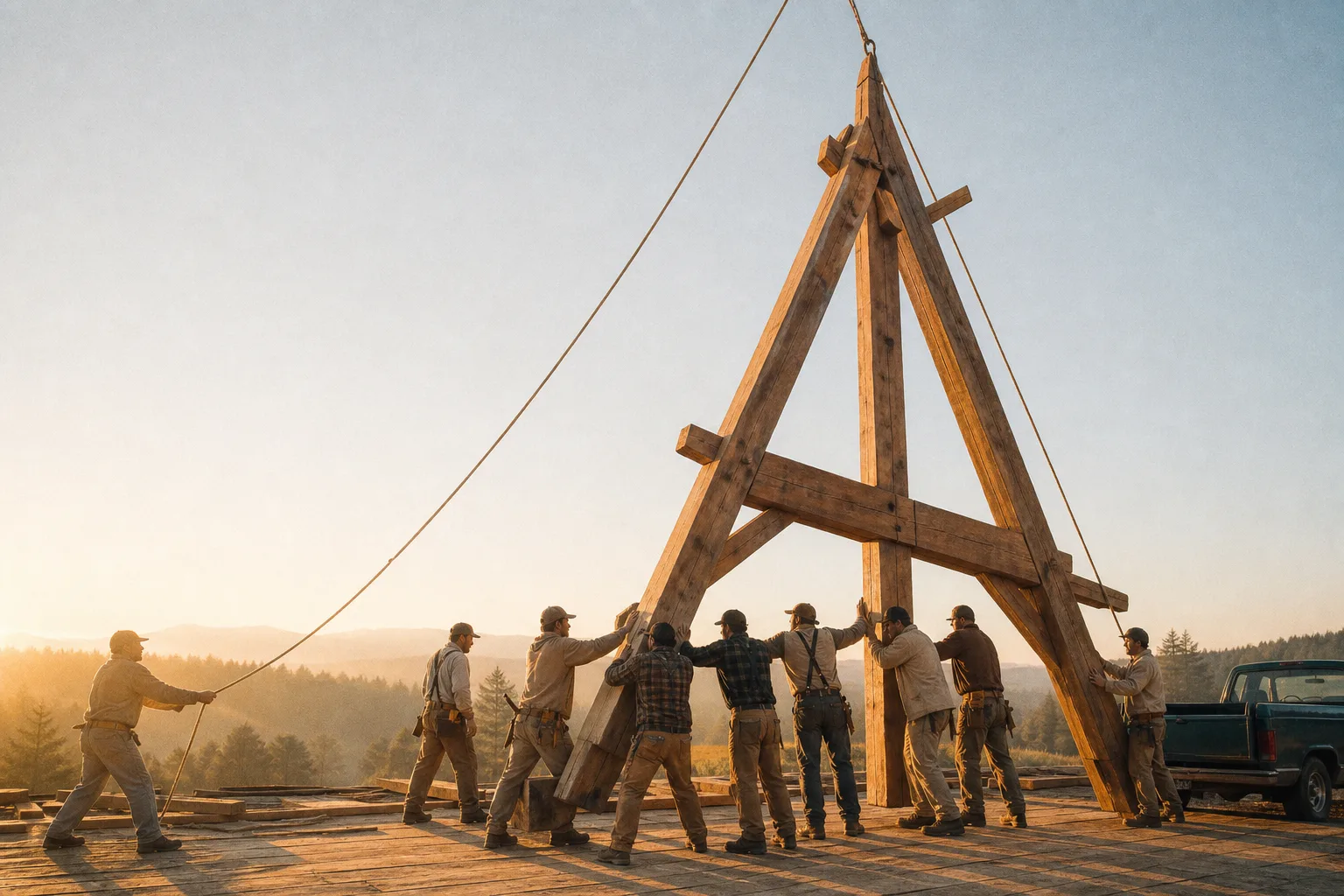
6:30 AM
Crew call
The whole crew sees the frame go up
Slack Code gives the build a channel the whole team can read
Slack launched Slack Code today: mention Claude, Devin, GitHub Copilot, or Vercel's agent on a project and it spins up a dedicated code channel where the team follows diffs, watches live HTML previews, and signs off before anything merges. When the work ships, the channel archives itself into a searchable audit log.
Slack says over 70 percent of code channels go from idea to merged PR inside a single day, and the companion developer post covers how a coding agent plugs into a channel and works from its context. ChatGPT support is marked coming soon.
8:00 AM
The raising
Workflow
Vercel's agent takes the same channels on call
Vercel for Slack entered public beta yesterday: mention the Vercel agent in a channel to trace an error back to the deploy that caused it, fix a failing build, or roll one back. The agent is read-only by default, and every change waits behind a plan card the team approves first, so the approval trail lives where the conversation already was.
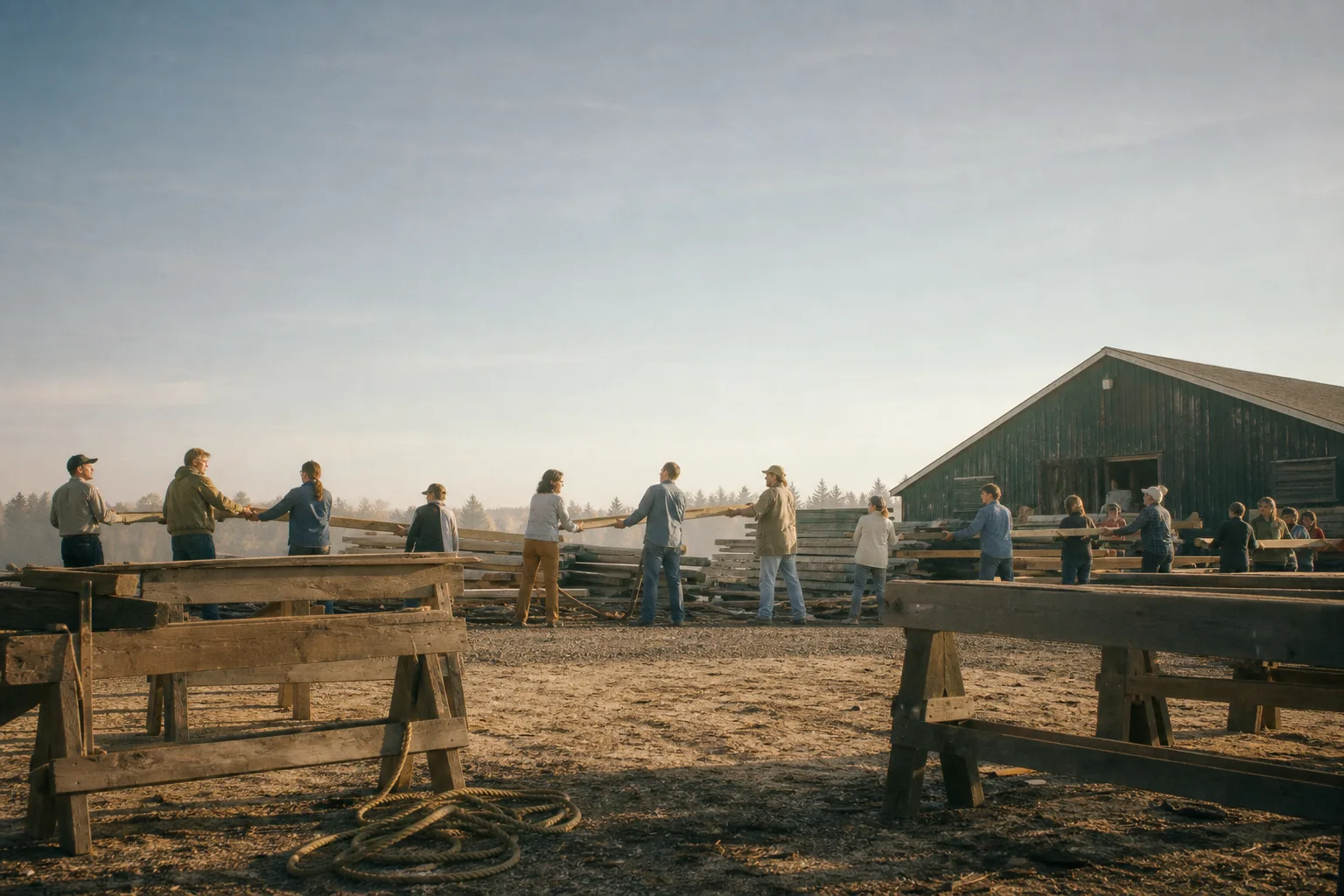
10:30 AM
Tool tent
Tooling
Bun 1.4 shows up with its own tools
Bun 1.4 builds image processing, a headless WebView, Markdown parsing, and cron scheduling straight into the runtime, and lands about 1,500 new Node compatibility tests that get Playwright and Next.js 16 running. Vercel Functions picked it up the same day.
Vendo hands your users the workbench
Vendo, fresh out of YC's summer batch, is an Apache licensed layer that reads your product's API and turns it into tools an embedded agent runs as the signed-in user, so customers can build their own micro apps on top of your product. Generated UI runs in a sandboxed iframe behind policy and audit checks.
1:00 PM
Finish work
Technique
The finish carpentry is plain HTML now
Chris Burnell's HTML Can Do That catalogs the dynamic behavior that needs no JavaScript anymore, popovers and dialogs and disclosure widgets among it, each with browser support tables and honest notes on where accessibility still falls short. He built the page in an hour on HTML Day and updated it this week.
3:30 PM
Inspection
Design move
Borrow this pattern
The day-of schedule spine. When a page describes a single day (a build day, an open house, a conference, a wedding), let the hour-by-hour schedule be the page's structure instead of a list buried near the footer: a rail carries the times, each section hangs off its stop, and exactly one stop is drawn as a gate, the moment the work gets checked before it moves on.
The honesty test: every stop names a real hour and a real task, and the gate marks a decision someone actually makes. Collapse the rail to inline time labels on small screens rather than forcing a desktop diagram onto a phone, and the moment the day gets padded with filler stops, the spine turns back into decoration.

4:30 PM
Sign-up sheet
Prompt Lab
Recreate today's system: a community build day volunteer page raised on a morning sky.
Build a one-page volunteer sign-up site for a community barn-raising
build day, run by a small nonprofit.

Page archetype: nonprofit event page for a single day of volunteer
work. Sections: hero with date and place, an hour-by-hour schedule,
crew roles, what to bring, a sign-up form, footer.

Ground and palette: a pale slate-blue morning sky (#C7DAE6) that warms
to a cream haze (#EAE2CB) at the foot of the page. Ink is dark walnut
(#33261A). Cards are cream plank panels (#F5EBD3, #FBF4E3) with thin
walnut borders, 3px corner radius, and one hard offset shadow. The
single accent is spruce green (#2F6136), with harvest ochre (#C99A3B)
reserved for the schedule rail; darken ochre to #7A5716 for small text.

Type: a heavy Clarendon slab like Besley in weights 700 to 900 for the
nameplate and headings. A plainspoken sans like Public Sans at 19px,
line-height 1.7, for body. A typewriter mono like Courier Prime for
time chips, stencil labels, and the sign-up sheet.

Masthead: a slightly tilted cream plank sign with stenciled uppercase
lettering and two nail heads, never a boxed metadata table.

Structure the page as a day-of schedule spine: a fixed-width left rail
with a vertical ochre line, a square peg marker and a solid green time
chip at each stop (crew call, the raising, tool tent, finish work,
inspection, keys), and each section's content hanging off its stop.
Draw exactly one stop, the inspection, as a gated marker: double ochre
border, ochre chip. Collapse the rail to inline time chips on mobile.

Imagery: warm documentary photographs in cream plank frames with mono
captions: a timber frame being raised at sunrise, a crew passing
lumber, a flat lay of gloves and a clipboard. Same morning light and
film grain in every image. No readable text inside images, no stock
3D illustrations, no screenshots.

Guardrails: WCAG AA contrast for every label on its actual background,
body text at least 18px and never justified, square corners or 3px
radius everywhere, no pill buttons, hover states on real links at
around 150ms, respect prefers-reduced-motion, no emoji icons, and
every schedule stop must name a real hour and a real task.
Take it to Beaver Builder AI, or to v0, Lovable, or Figma Make.
6:00 PM
Keys
Field note
A barn goes up in a day because the whole crew shows up. Slack is betting the same is true of your next feature.
DUSK
Ledger
Sources
- Slack Code: where your team and agents build together · Slack blog
- How coding agents work in Slack · Slack developer blog
- Introducing Vercel for Slack · Vercel blog
- Bun 1.4 · Bun blog
- Bun 1.4 is now available in Vercel Functions · Vercel changelog
- Vendo: let users build features on top of your product · GitHub
- HTML Can Do That · Chris Burnell