No. 047Tuesday · 23 June 2026Agentic web design · field report≈ 4 min read
The print room · today's hang
Finish the design, get back a live URL
The canvas now opens onto a public address: Claude Design can deploy straight to Vercel, while a CSS scroll trick and Cursor's automations round out the week.
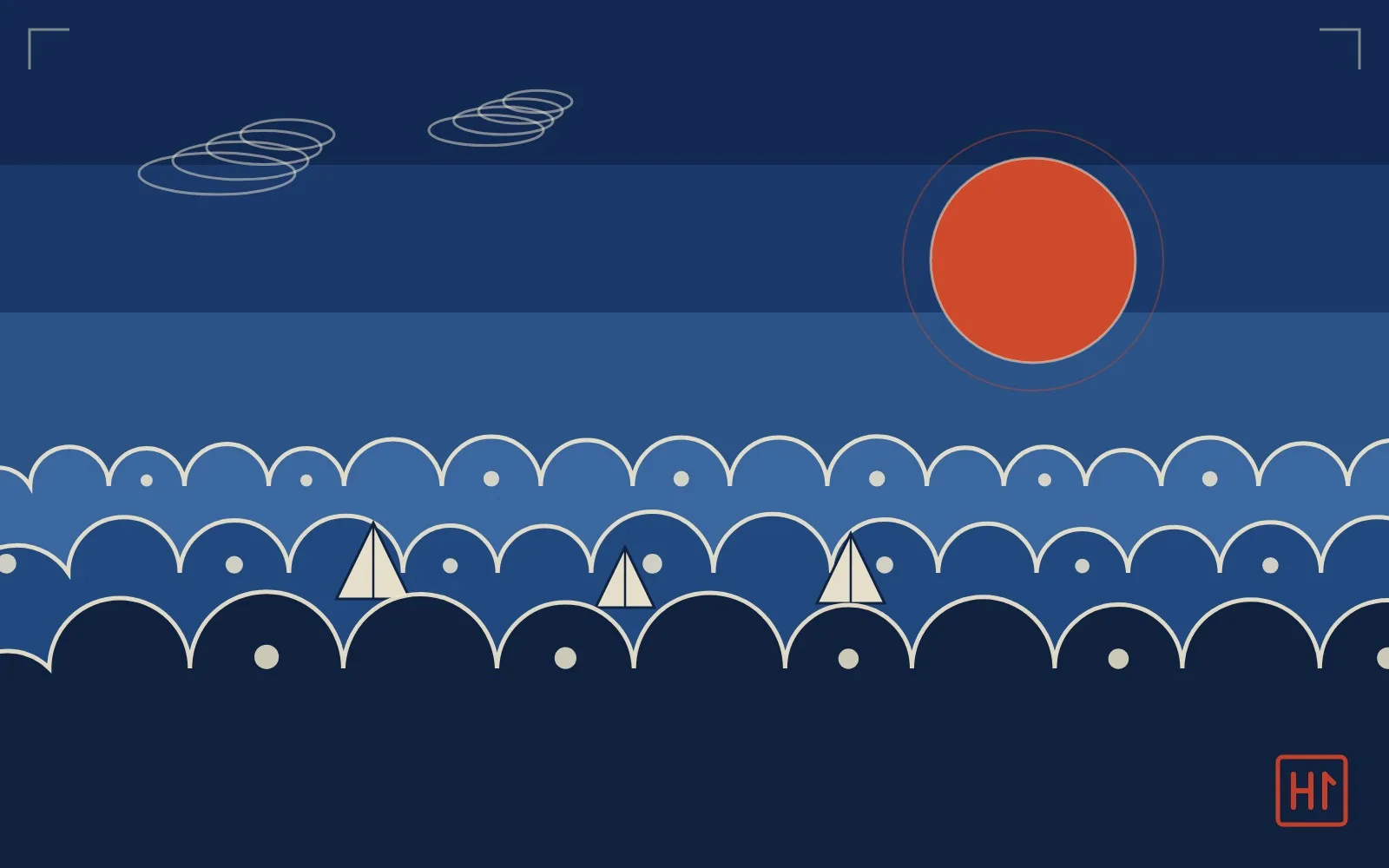
Plate I · After the tideIndigo on cream · no readable text
For a year the work was teaching the canvas to build. This week it is about shipping: a design tool that publishes a real site in one step, a layout technique that needs no script, a scheduled agent that can drive a browser and show its work, and a small open tool for giving any generated page a home. The studio door is open, and the prints are leaving the room.
Today's Art Direction
Aizuri-e Woodblock Print
The briefing hung as an indigo print exhibition: cream plates matted on a deep blue wall, vermilion seals, scalloped wave crests, and museum labels carrying the metadata.
Aizuri-e were the blue-printed ukiyo-e woodblocks the Edo studios made when Prussian blue arrived, the same indigo register behind Hokusai's most famous waves. Translated to the web it becomes a museum print room: the dark gallery wall is the page, each story is a cream print matted and hung with a numbered plate label, and the masthead reads like the wall placard at the door. Color zones the structure rather than decorating it, flat indigo fields and key-line foam carry the idiom in the imagery, and every word sits on a calm cream field at 20px so the woodblock never fights the reading.
Vercel is now a send-to destination inside Claude Design. When a layout is ready you pick Vercel in the Share menu, it deploys as a new project in your connected account, and a URL comes back you can open and share, all without leaving the canvas. Connect the Vercel MCP server once and the trip from composition to live site collapses to a single click.
It extends the run of recent send-to targets, where Adobe, Canva, Figma, Wix and the rest turned the canvas into a hub. This one closes a different loop: the thing you hand off is not a file but a working page, the case for treating the page itself as the design file.
A new CSS-Tricks walkthrough ties two elements to the same scroll and sends them in opposite directions, using animation-timeline and scroll-driven animations with no JavaScript at all. It is a compact, native way to build editorial layering, a caption rising as an image drifts down, that used to mean reaching for a scroll library.
Scroll-driven animation is a thread this column picked up earlier this month; the opposing-direction case is the kind of small move a working designer can borrow into a real project the same afternoon.
Cursor's latest Automations update gives scheduled runs a computer-use tool on by default, so a job kicked off on a timer can open a browser, click through a flow, and return a demo or artifact of the result rather than a paragraph describing it. A new /automate command, GitHub and Slack triggers, and cloud subagents started with /in-cloud push more of the loop off your own machine.
The shift is from automation that reports to automation that performs and then shows you the recording. For anyone wiring routine site checks or content runs, the demo is the proof, and the proof now comes back as something you can watch.
HoneyDrop handles the other end of that loop: where a generated page actually lives. Drop an HTML file or a Markdown note and it hands back a shareable link, rendering Markdown to HTML and serving raw HTML as-is. It runs behind Caddy on your own server and keeps the upload endpoint on localhost behind basic auth. It is built by this publication's editor.
Think of it as the modest counterpart to the send-to-Vercel news above. Not every one-off page wants a full project deploy, and a private drop box that returns a tidy address is enough to put a result somewhere real. The editor's own hive at robb.ee is published with it.
github.com · open source · MIT
The finished canvas now ends at a public address.
Today's hang · in four plates
Aizuri-e Woodblock Exhibition
Prompt Lab
Recreate today's art direction
Design a single web page as a museum print room hanging an aizuri-e (indigo woodblock) exhibition: a short briefing of linked stories shown as framed prints on a gallery wall. Page archetype is an exhibition microsite, not a dashboard, blog, or card grid.

Ground: a deep indigo gallery wall (#14274F) is the page. Each story is a cream washi print panel (#F0E7D0) matted and hung on the wall, with sumi ink text (#211D16) at 20px, line-height 1.7, measure 66 to 68 characters, never justified. Accents: a low vermilion (#CF4A2C) for plate numbers and seals, a sky indigo (#6F9BC4) for labels on the dark wall, a quiet ochre (#BD8420) used sparingly. Links on cream use a deep indigo ink (#1F4A82) so they stay WCAG AA; never set body text in vermilion or on the dark wall.

Layout: a wall placard masthead reads like a museum object label (edition number, weekday and date, collection, reading time) in mono small caps. The hero hangs one large framed woodblock plate beside the title. Stories run as numbered plates (Plate II, III, IV): a plaque with a vermilion roman numeral and a mono section kicker, a serif headline link, one or two plain paragraphs, and a museum caption line (source, kind, date). One large display pull-quote sits directly on the indigo wall. An exhibition-checklist Sources list closes the show.

Type: Shippori Mincho B1 for the display headline, plate headlines, and section heads; Source Serif 4 for body and the single italic art-direction summary; Geist Mono for labels, the wall placard, captions, and the prompt block.

Components: framed and matted print panels with a tight drop shadow on the dark wall, mono wall labels, a vermilion seal mark, scalloped key-line wave motifs confined to one generated plate. Generate one woodblock image only: flat indigo tonal bands, a vermilion sun, scalloped foam wave crests outlined in cream, a few abstract sails, corner registration marks, and a seal, with no readable text inside the image. Add one restrained micro-interaction, a hung print that lifts slightly on hover with a tight shadow, behind a prefers-reduced-motion guard. No gradients, no glow, no neon, no pill-shaping everything, no accent left-border stripes, no fake search fields or toggles, no emoji.
Works in: Beaver Builder AI, v0, Lovable, Cursor, Figma Make.
Field Note
Stack Overflow opened its 2026 developer survey this week for human developers only. The aside lands because the week's releases keep handing more of the build to the tools, and someone still has to say what the work should be.