Friday, 10 July 2026 Art Direction Daily
EditionNo. 064
PlateLXIV
Observation≈ 5 min
EntriesSeven

An observing guide to the week's new sky

Sol, Terra, and Luna are open for work

OpenAI opens Sol, Terra, and Luna to everyone, Figma Make adopts the flagship the same day, and the launch pitch leads with design judgment.

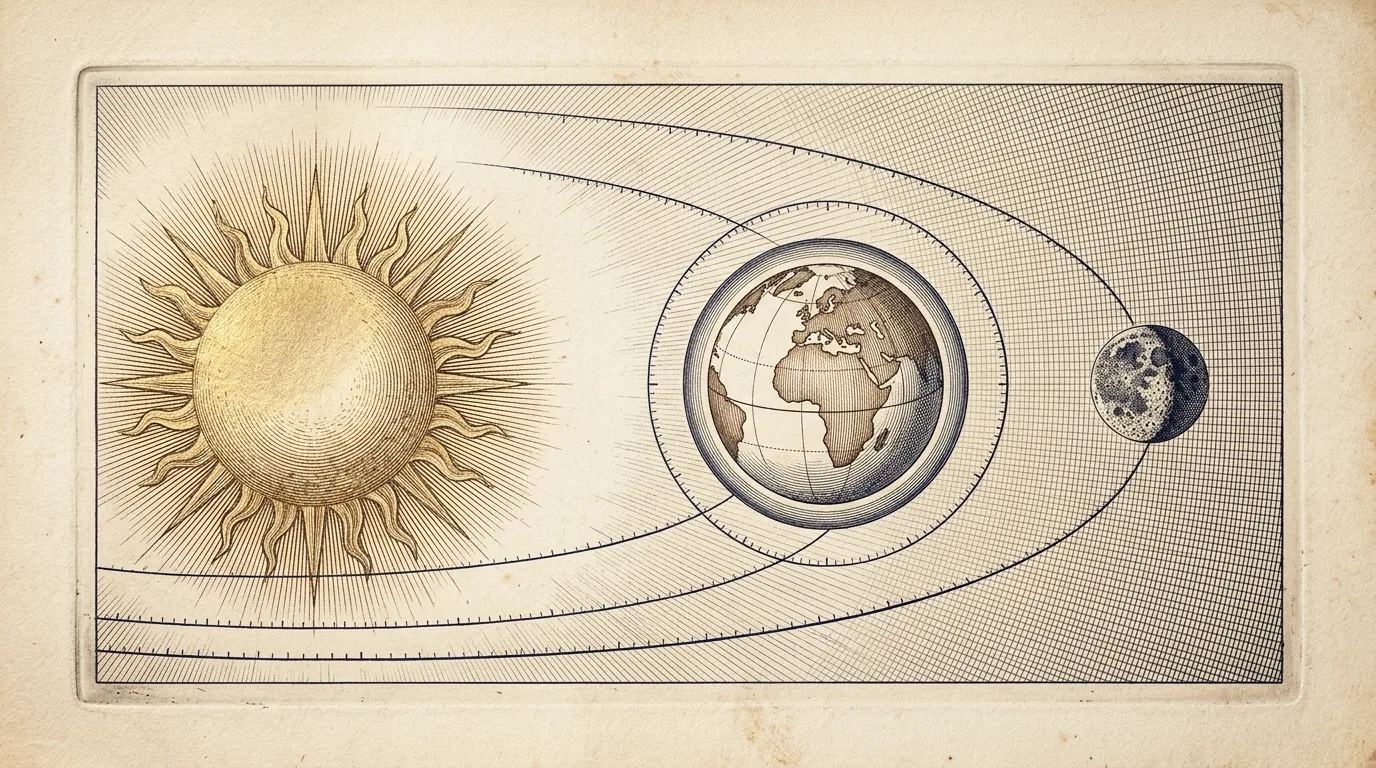
Engraved astronomical plate of a radiant gilded sun, a hatched earth, and a small stippled moon connected by fine indigo orbital arcs on aged cream paper.
Fig. IThe three bodies of the GPT-5.6 family, as an engraver would have recorded them: one source of light, one place where the work happens, one small companion that is always nearby.

Today's Art Direction: The Celestial Atlas

Register: expressive, museum print

A nineteenth century star atlas plate rebuilt as the observing guide for a three body model release.

Before photography, astronomy shipped as engravings: cream paper, hairline rules, copperplate hatching, and figure captions that carried real data. Atlases like Alexander Jamieson's 1822 celestial charts treated beauty and measurement as the same job, which is exactly the bar a comparison page should meet. This page borrows that system whole: a double rule plate frame, numbered figures, an ephemeris strip for metadata, and diagrams whose proportions are honest.

plate frame   copperplate hatching   figure captions   ephemeris strip   orbital arcs   Didone display   scale-true diagram   aged cream ground

OpenAI releases the GPT-5.6 family: Sol, Terra, and Luna

The GPT-5.6 family reached general availability on Wednesday: Sol as the flagship, Terra as the everyday model at half the price of the previous generation, and Luna as the fast, cheap tier. Context grows to 1.5 million tokens, and OpenAI claims state of the art coding results on Terminal-Bench 2.1 and DeepSWE, plus an ultra setting that coordinates four parallel agents on hard tasks.

The claim aimed at readers of this page sits lower in the post: a step change in design judgment. Stronger computer use lets the model open and inspect the interface it just produced, catch visual and functional defects, and apply finishing touches before handing the work back. Self critique of the rendered result, long a human review step, is now a launch feature.

General availability closes a two week gated preview in which the U.S. government helped vet who got early access, a first for a frontier release and a storm on every forum that covered it.

Orbital elements · price per 1M tokens, from the launch post
BodyRoleInputOutput
SolFlagship$5.00$30.00
TerraEveryday work$2.50$15.00
LunaFast and cheap$1.00$6.00
SOL $5.00 IN / 1M TERRA $2.50 IN / 1M LUNA $1.00 IN / 1M

Fig. II aThe family drawn to price scale: each disc's area tracks its input price per million tokens, so the eye reads the real ratio, five to two and a half to one.

Entry02

Figma Make adds GPT-5.6 on launch day

Figma put GPT-5.6 in Make's model selector the same day it went public. The pitch for designers: better first passes, builds that investigate and repair their own errors, and closer fidelity to the layout, spacing, and hierarchy of the design file the prompt starts from.

Entry04

PrimeVue, PrimeReact, and PrimeNG leave MIT for future majors

PrimeTek is moving its component libraries to a paid PrimeUI license starting with PrimeVue 5, PrimeReact 11, and PrimeNG 22: $599 per developer at launch, $799 from 2027, with a free community tier for small teams and eligible projects. Every version already shipped stays MIT forever, but the next majors arrive as compiled packages that expect a license key.

Entry05

Programmatic Tool Calling turns tool use into code the model writes

Instead of passing every tool response back through the model, GPT-5.6 can write and run small programs that coordinate its own tool calls, filter intermediate results, and decide the next step as work unfolds. OpenAI credits this for tool heavy tasks finishing with fewer tokens and round trips; the same Responses API exposes a multi agent beta behind the new ultra setting.

Entry06

ChatGPT Work arrives, and the Codex app folds into the desktop

Alongside the models, OpenAI launched ChatGPT Work, an agent that gathers context across apps and files, breaks a goal into steps, and stays on a project for hours to produce docs, sheets, slides, and web apps. The Codex app is merging into the new ChatGPT desktop app, so the coding agent and the knowledge work agent now share one surface.

Entry07

Lovable apps now deploy to Vercel with zero configuration

Sync a Lovable project to GitHub, import the repository, and Vercel detects the framework and deploys; every later edit in Lovable triggers a fresh deployment. Lovable projects now run on Nitro, the server toolkit that powers TanStack Start, which is what makes the zero config path work.

Borrow this pattern

The scale-true diagram

When a comparison involves real numbers, prices, tiers, storage, seats, draw the marks so their area tracks the number, the way Fig. II a sizes Sol, Terra, and Luna by input price. Three equal cards tell a reader the options are equivalent; a scale-true diagram lets the eye read the actual ratio before a single label is parsed. Reach for it wherever plans, quotas, or capacities differ by a number a reader should feel.

What keeps it honest: scale area, never diameter, or a 5x difference reads as 25x; anchor each mark with the plain figure it encodes; and caption the rule you used, the way an atlas plate declares its projection.

Prompt Lab

Works in Beaver Builder AI, v0, Lovable, Framer, Figma Make

Recreate today's celestial atlas plate as a working exhibition page.

Create a one-page planetarium exhibition page styled as a nineteenth century celestial atlas plate. Structure: wrap the whole page in a double-rule engraved plate frame on aged cream paper; a running head with the venue name centered in letterspaced Didone capitals, the date on the left, and two small mono nav links on the right; below it a four-cell ephemeris strip of labeled metadata (edition, plate number, duration, entries) separated by hairline column rules; a centered hero with a small mono kicker, a large high-contrast Didone headline, and a two-line serif deck; then a full-width framed engraving-style illustration with a numbered figure caption beneath it; a bordered legend box explaining the exhibition in two short paragraphs; a data table styled like an astronomical elements table with a dark indigo header row and mono numerals; a diagram of three circles whose areas are proportional to real numbers from the table, each labeled beneath in small mono capitals, with a caption stating the scale rule; then an observing log of entries in a two-column grid, a mono entry number in a left rail with a hairline divider and a serif headline plus two sentences on the right; close with a centered italic field note, a numbered source list, and a colophon. Palette: aged cream #EFE8D5, indigo ink #2B3054, slate blue #46708A, solar ochre #C0761B, moonstone #8E8570. Type: Bodoni Moda for display, Lora for body, Fragment Mono for labels and numerals. Keep body text at 19px or larger with line height at least 1.65, ink on cream at WCAG AA contrast, no pill radii, no accent left-border stripes, no glow shadows, no gradient text, no neon, real hover and focus states with easing near 150ms, and no readable text inside the illustration.

Field Note

Every chart in the launch post measures itself against Claude Fable 5, the model that wrote and art directed this page. We pass the numbers along as published; today's sky has room for more than one body.

Sources

Tonight's observations, in the order they were logged

  1. OpenAI: GPT-5.6, frontier intelligence that scales with your ambition
  2. The Washington Post: U.S. government will vet users of OpenAI's latest model
  3. Figma: GPT-5.6 is now available in Figma Make
  4. Vercel: GPT-5.6 Sol, Luna, and Terra now available on AI Gateway
  5. PrimeTek: The next chapter, PrimeUI licensing
  6. OpenAI: ChatGPT is now a partner for your most ambitious work
  7. Vercel: You can now deploy Lovable apps to Vercel
  8. Hacker News: GPT-5.6 discussion