Art Direction Daily
No. 079
Saturday, July 25, 2026
Reading time ≈ 4 min

Anthropic deleted 80% of Claude Code's system prompt

The new context engineering guidance for the Claude 5 generation opens with a deletion: most of the rulebook came out, and the benchmarks did not blink.
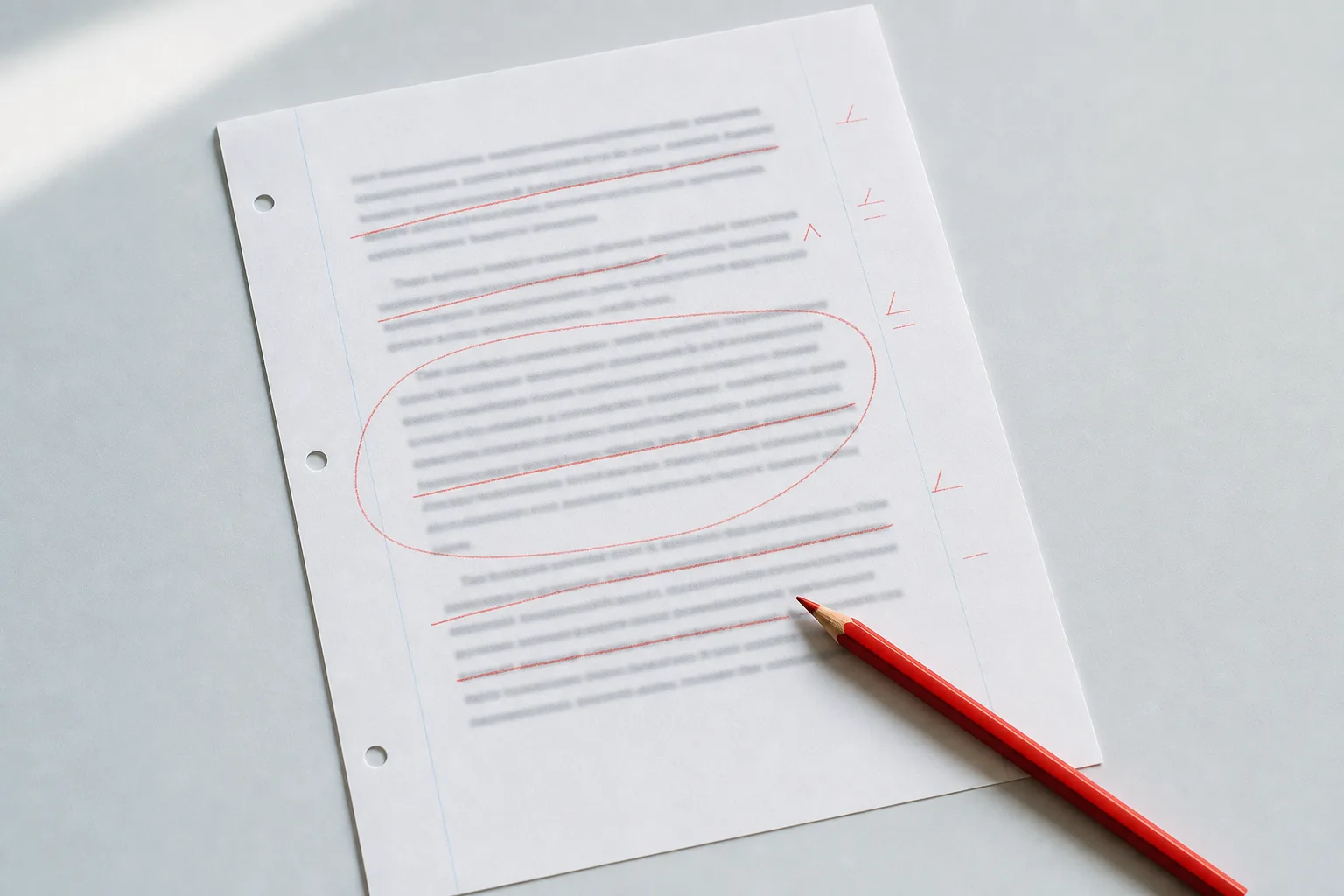
Overhead photograph of a typescript page marked with red pencil: struck lines, margin carets, and a deletion loop circling a full paragraph, with a red editing pencil across the sheet.
FIG. 1   THE FIRST PASS. THE LOOP MEANS THE WHOLE PARAGRAPH GOES.

The brief

Anthropic published its new rules of context engineering for the Claude 5 generation, and the first rule is the red pencil: more than 80 percent of Claude Code's system prompt came out for Opus 5 and Fable 5, with no measured drop in performance. The team calls the change unhobbling, a finding that the old constraints were not guardrails so much as weight.

The replacement advice reads like an editor's style sheet. State judgment, not rules: ask for code that matches the surrounding style rather than maintaining a ban list. Keep project instruction files down to the gotchas a stranger could not guess. Let skills load context at the moment it is needed instead of front-loading everything, and run the new /doctor command to rightsize what is left. Opus 5 itself is the model yesterday's issue logged on launch day.

Removed
over 80 percent of the Claude Code system prompt
Kept
repository gotchas, judgment calls, the constraints code cannot show
Added
/doctor, a command that rightsizes skills and docs
Result
no measured loss

THE LEDGER ON THE ANNOUNCEMENT, PER THE POST.

Tooling

A day at the top

Claude Opus 5 sits at number one on the Artificial Analysis intelligence leaderboard, the ranking that carried its launch across Hacker News' front page. Vercel added the model to AI Gateway the same day, with reasoning on by default and fallback routing for provider hiccups.

The install race, counted in casks

Homebrew's public cask analytics show Codex ahead of Claude Code in first-time installs across the last 30 days. One package manager is a narrow window on the market, but it is a rare public number on the coding tool race.

Technique

A window into the sandbox

Vercel's dashboard now connects to any running Sandbox: run commands, browse the file system, check ports, and snapshot state from the browser. Useful the moment a build behaves in the sandbox in a way you cannot reproduce at your own desk.

Workflow

An intake gate for context

Curated Claude Code is a small toolkit built on the same premise as Anthropic's post: context is a budget. It ships a vetted set of eight skills and two agents, plus a /vet gate that reviews any candidate tool before it earns a place in the setup.

Borrow this pattern

The annotation margin

Reserve a narrow rail beside the main column, 200 to 240 pixels, and let it carry the section labels plus one short working note each, set small and in a second voice. The body column keeps its measure while the margin does the wayfinding and the commentary that would otherwise interrupt the prose.

It suits case studies, changelogs, policy pages, any page that wants to show its work. Three things keep the rail honest: the notes are real sentences written for the reader, never decoration; the column holds 60 to 75 characters; and below tablet width the rail folds above its section instead of squeezing the text.

Prompt Lab

Build a one page landing site for a freelance editorial studio called
The Line Edit, styled as a marked-up typescript manuscript on a cool
desk.

Layout: a typewritten title block masthead (studio name, date, one
service line), then a hero headline shown as a live correction: one
verbose line struck through in red pencil, a red caret, and the tight
replacement line set large in a high-contrast editorial serif. Below
it, bond-white sheet panels on a pale gray desk ground, each sheet
ruled with a single vertical non-photo blue margin line. The main
column is 66 characters wide with a 200 pixel annotation margin on
the right carrying red pass stamps (FIRST PASS, LINE EDIT, FACT
CHECK, PROOF) and one short italic working note per section. Include
an edit ledger of labeled rows (REMOVED, KEPT, ADDED, RESULT), a
services section, and a dark graphite rate-card footer.

Palette: bond white #FBFBF9 sheets on desk gray #E9EAE8, graphite ink
#26282B, vermilion red pencil #C6371F as the only loud accent,
non-photo blue #B5CEDE for rules and quiet washes, slate blue #46687F
for italic notes.

Type: Newsreader for display with true italics, Hanken Grotesk for
body text at 19px with 1.68 line height, Courier Prime for
typewritten labels, stamps, captions, and the ledger.

Guardrails: body text at least 18px, line length 60 to 75 characters,
WCAG AA contrast for small labels, no gradients, no glow, no fake
readable text in images, strikethrough used once as the hero device,
and the annotation margin folds above its section below 900px.

Paste it into Claude Code, v0, Bolt, or Lovable; it is equally at home in Beaver Builder AI.

Field Note

This publication runs on the models the lead item describes, steered by a folder of instruction files that has only ever grown. The red pencil is now scheduled.

Red pencil shavings, a brass sharpener, and a short red pencil stub on white paper.