The Pneumatic Post

House dispatch service of Art Direction Daily

LINE NO. 093
SUNDAY, AUGUST 9, 2026
READ TIME: ABOUT 5 MIN

Priority dispatch accepted

Claude Code sessions can now message each other

Claude Code sessions on one machine can now message each other: a warning, an answer, a status, carried over local sockets that never touch Anthropic's servers. Today that news rides a page built like a building's pneumatic post.

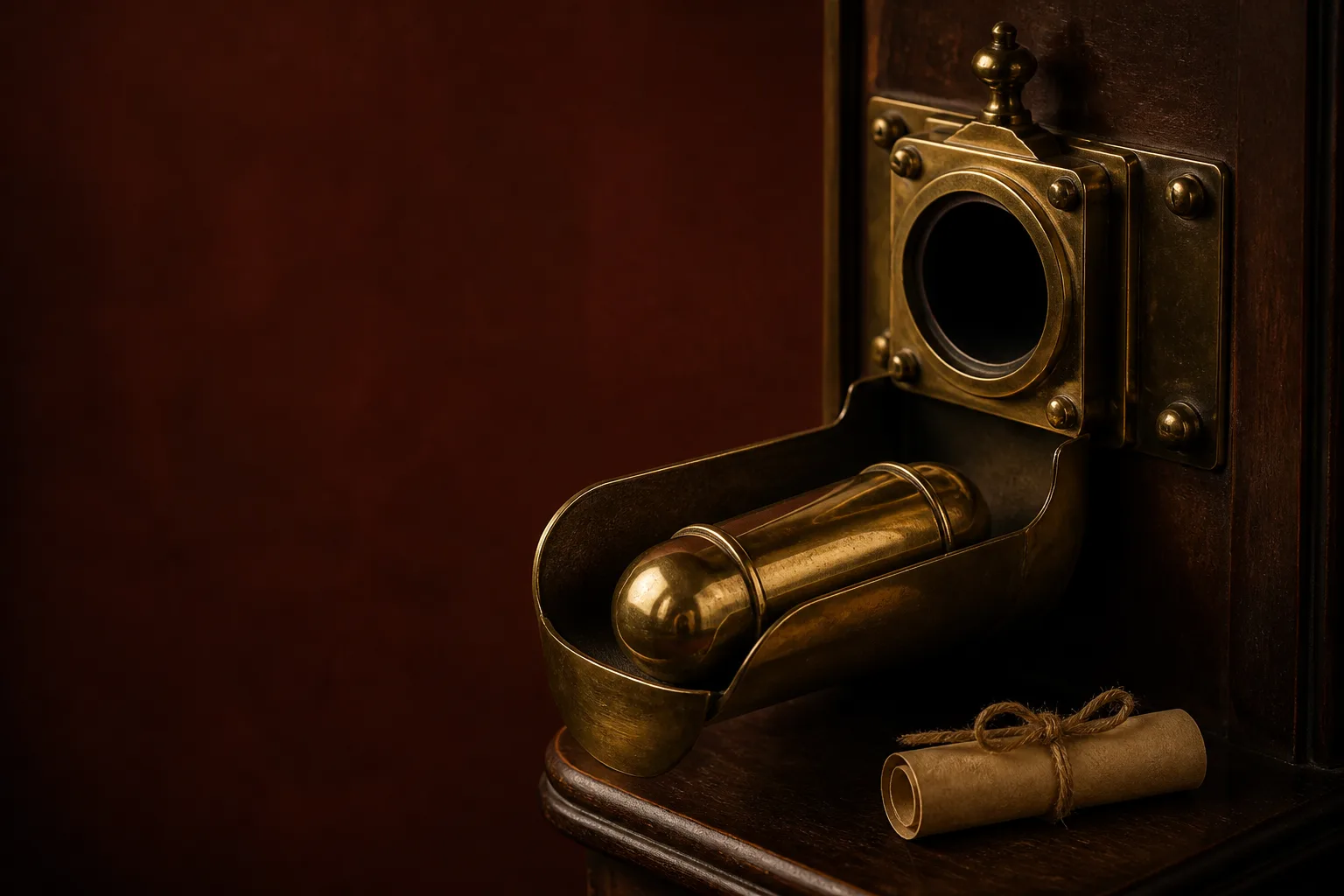
A brass pneumatic tube capsule resting in a curved receiving basket at a wall terminal, a small note tied with twine beside it
Receiving terminal, third floor

Priority dispatchSessions learn to write to each other

FROM
Session A, floor three, mid-refactor
TO
Session B, floor one, building on the old API
CONTENTS
Text summary only. No history, no files, no permissions.

Claude Code v2.1.224 adds cross-session messaging

Friday's release gives every session on a Mac or Linux box two new tools: ListAgents to discover your other running sessions, and SendMessage to deliver a note to one of them by name. The release notes are terse; the docs page above is the primary source worth reading.

The details are the story. Messages between sessions on the same machine move over per-session Unix sockets and never reach Anthropic's servers, a point MacRumors led with when the feature crossed into mainstream coverage on Saturday. Only text travels, and an incoming note cannot approve a permission request or run a command. A day later v2.1.225 stretched the reach: a session can now start a conversation with your Remote Control sessions on other machines instead of only replying.

For the field guide, read Blake Crosley's teardown: where the sockets live, what the peers list shows, and the four unrelated privacy variables that each disable the feature outright.
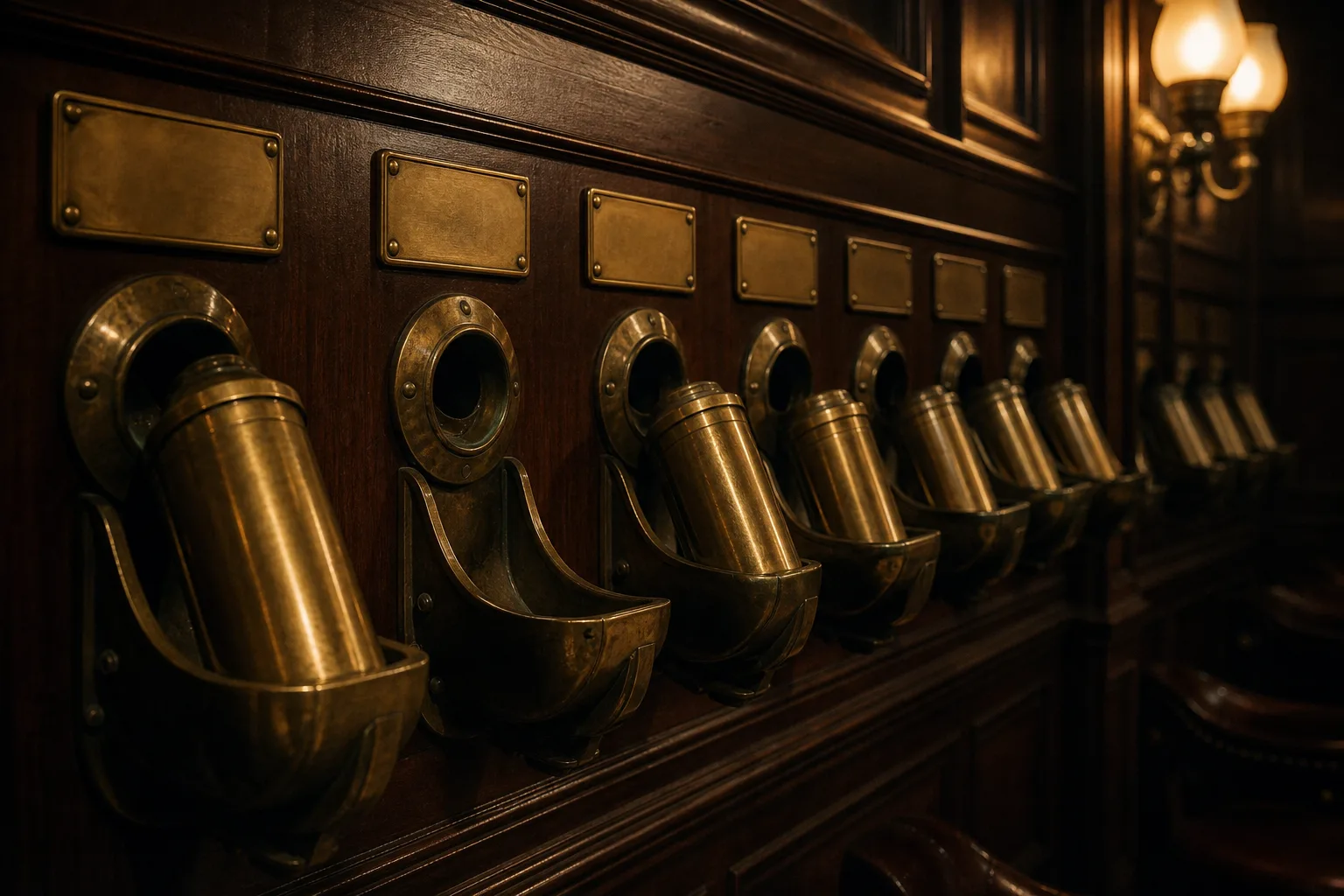
A bank of brass pneumatic tube terminals along a dark paneled wall, capsules docked in curved receiving baskets under gaslight

How the house line works

The service rules of the new messaging layer, posted the way any building superintendent would post them.

House tubes

Within the building, capsules travel house lines only. Same-machine messages ride local sockets scoped to your OS user; nothing transits the street.

The capsule

A capsule holds a written summary and nothing else. Conversation history, files, and permissions stay at the sender's desk.

Street post

Mail to another building routes through the central office. Since v2.1.225 you may open a correspondence as well as answer one, while Remote Control is connected.

Building directoryToday's art direction

Today's Art Direction

The Pneumatic Post

Interoffice mail for the agent era, set in brass, oxblood, and verdigris.

The Pneumatic Post dresses a local service page in the hardware of Victorian interoffice mail: an engraved nameplate, a manila routing tag, and dispatch cards that each open with a routing slip. The register is gaslight rather than steampunk costume: one warm key light, oxblood walls, and patina applied the way a print designer uses a spot color. Every metaphor maps to a working component. Stations are section headers, slips are metadata rows, and the street office stands in for external post.

Route spineRouting slipCapsule cardEngraved nameplateManila tagGaslight brassVerdigris

Station 01Tooling

FROM
Reflex Build
CONTENTS
Layout as labeled blocks, before any code

Reflex Build adds Wireframes

A Plan-tab canvas shows the app as labeled blocks you can drag, resize, and draw. One button sends the layout to the coding agent, which rewrites the pages to match; another snapshots the built app back into blocks. The bet is that page structure should be edited in the format designers think in, not described in prose.

FROM
Element Node, open source, AGPL
CONTENTS
One JSON tree, two kinds of editor

Element Node: agents build it, humans keep editing it

An open source CMS built on one decision: the page is a single JSON tree of sections, columns, and 51 typed widgets, and the agent and the human edit the same representation. Agents come in through a Claude Code skill, an MCP server, or a REST API; people get a three-panel visual editor, so nothing the agent ships is locked away from the client.

Station 02Technique

FROM
eighttrigrams, via the HN front page
CONTENTS
A provenance score for every line

us-vs-them: line-level provenance under agentic editing

A Clojure tool that reads a file's git history and scores each range from fully machine to fully human, surfacing the islands a person wrote by hand inside a sea of generated text. The intended use is a guardrail: an agent should have a very good reason before it touches the human-scored lines.

Station 03Workflow

FROM
Anthropic, effective August 14
CONTENTS
Auto mode becomes the default

Auto mode becomes the Claude Code default

New sessions on Pro, Max, and Team plans will start in auto mode from August 14, with a safety classifier standing in for click-through approvals. Simon Willison reads the numbers with the right squint: in Anthropic's own evaluation, human reviewers caught 13.6 percent of harmful actions while the classifier blocked 89, which says as much about approval fatigue as it does about the classifier.

FROM
Vercel changelog
CONTENTS
Gateway and Sandbox reach Hermes

Hermes Agent gains AI Gateway and Vercel Sandbox

Nous Research's Hermes Agent can now route its model calls through Vercel's AI Gateway and execute work inside Vercel Sandbox, one more harness settling onto shared infrastructure rather than running its own.

Station 04Design move

Borrow this pattern

The route spine. One continuous line runs down the content gutter, and every section header docks onto it as a station: a ring, a number, a name. A long scrolling page starts reading as a single delivery route instead of a stack of unrelated blocks, and the reader always knows how far along the line they are.

Use it on how-it-works pages, onboarding flows, and any service page with real sequence. The pattern stays honest under two conditions: the line only earns its place if the sections genuinely follow one another, and the content sets the spacing. If you catch yourself stretching a section so the stations look evenly spaced, remove the line, not the content.

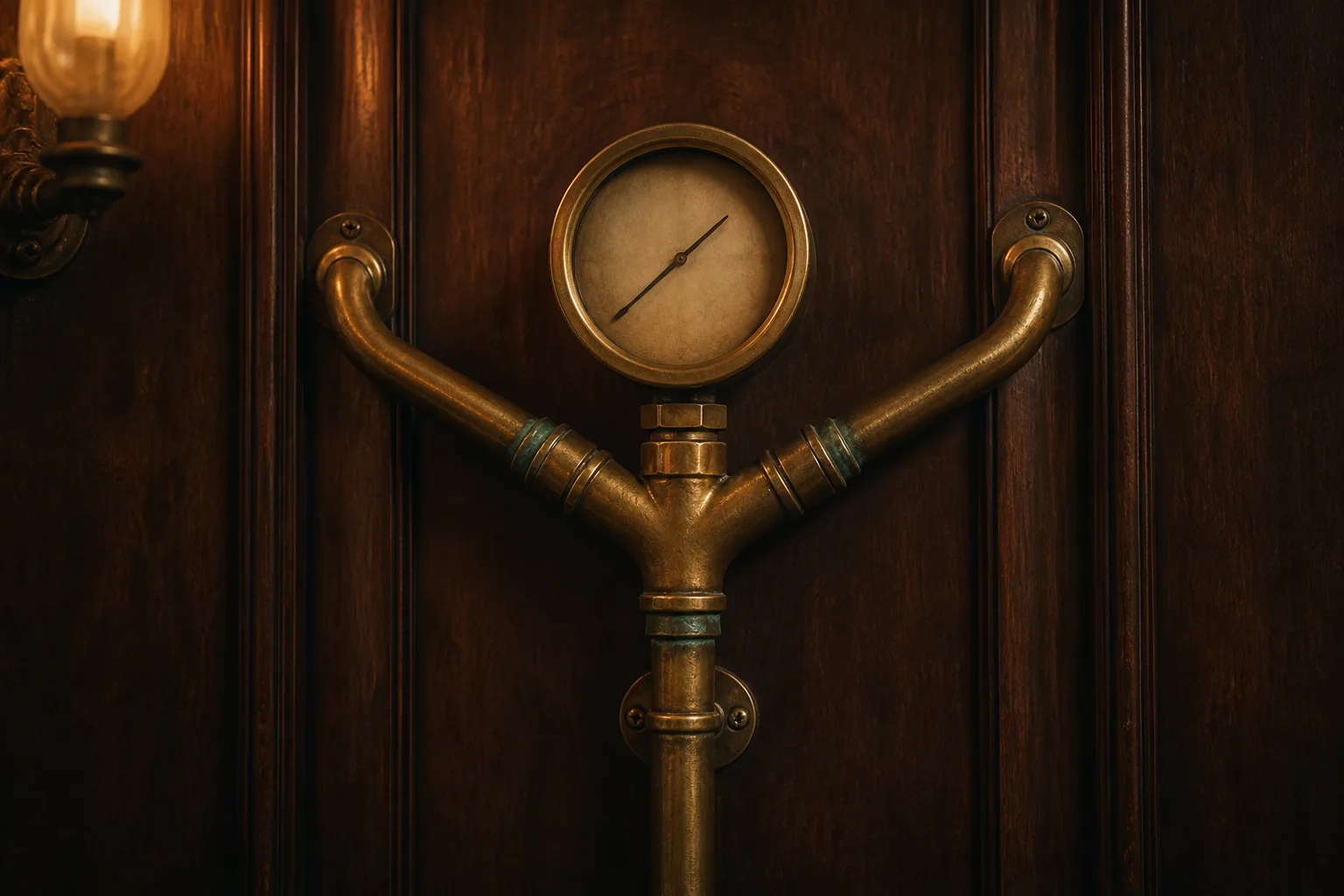
A Y-shaped brass pneumatic tube junction with a blank-faced pressure gauge mounted on dark wood paneling
Junction, mezzanine riser

Station 05Prompt lab

Feed this prompt to an AI builder and it will rebuild today's visual system for a page of your own.

Build a one-page landing site for a building's internal pneumatic-post
service. The archetype is a local service business page: hero, how it
works, service list, and a closing subscribe or request panel. Victorian
industrial register, gaslight rather than steampunk.

Canvas: deep oxblood brown ground #3B1D17, parchment text #F1E4CC, cream
card stock #F3E9D2 with espresso ink #2A1610, brass #C99E58 for engraved
labels, and verdigris #4CA48C as the single loud accent. Type: Rozha One
for display, Alegreya Sans for body, Courier Prime for slips and labels.
The pairing logic is a fat engraved didone against a warm humanist
grotesque, with typewriter mono reserved for metadata.

Masthead: an engraved brass nameplate with rivet corners and letterspaced
caps, plus a manila routing tag rotated about two degrees carrying the
issue number, date, and reading time as typewriter lines. No boxed
metadata grids.

Structure: one continuous verdigris route line runs down the left gutter
of the content column. Every section header docks onto it as a station:
a small brass ring, a mono station number, and a display-face name.
Content items are capsule cards on cream stock, each opened by a routing
slip of labeled rows reading FROM, TO, CONTENTS above a hairline rule.
Never use dot-separator chains for metadata. Include one darker
house-rules band with a wide photograph on top and a three-column list of
plain-language service rules beneath it.

Imagery: editorial still-life photographs of brass pneumatic hardware in
warm gaslight on oxblood walls, subtle film grain, generous negative
space, no legible text inside any image.

Guardrails: body text at least 19px with 1.7 line height and a 60 to 75
character measure, WCAG AA contrast for every label against its actual
background, visible hover and focus states on real links at around 150ms,
a prefers-reduced-motion guard, no neon, no gradient text, no glow, no
fake UI chrome, and no accent left-border stripes on cards.

Works in Beaver Builder AI, v0, Lovable, Figma Make, and any builder that accepts a long prompt.

Last collectionField note

The transport underneath the week's flashiest feature is a Unix domain socket, a fixture of the operating system since the early eighties. The newest thing in the building is often the oldest tube in the wall.

RegisterSources