Before the first cut
Your website builder finally learned to ask first
Netlify's Agent Runners now pause to interview you before the first commit. The intake meeting, the oldest tool in client work, just became part of the toolchain.
Should entries save to a database, or live in the code as a read-only placeholder?
Today's art direction
The Measurement Sheet
A bespoke tailor's commission page: cream sheets pinned to grey flannel, basting-stitch rules, and fitting-numbered sections.
A made-to-measure atelier sells a process, not a product: measure, ask, cut, fit. This page borrows that logic for a service-business landing page. The ground is grey wool flannel, content sits on cream measurement sheets with punched corners and brass pins, dashed rules read as basting stitches, and each section is a numbered fitting. One measuring-tape gold carries every loud mark against a navy-ink text hand.
Today's cloth, four cuts
The first fitting
Netlify's Agent Runners now ask clarifying questions before they build
Ask for a tracker dashboard and the agent no longer guesses whether entries should save to a database or whether the look should be dark and high contrast or light and editorial: it pauses and asks, right where the run happens. Answering is optional per question, you can add context in your own words, and the run then continues into a Deploy Preview as usual, with every agent and model Agent Runners supports.
The interesting part for working designers is what this legitimizes. The intake questionnaire, the thing agencies have refined for decades, is becoming a first-class interface in build tools, and the teams that know which questions matter are the ones who have asked them across a hundred client projects.
Tooling
Framer adds a reasoning selector and Fast Mode to Agents
The model picker now includes a reasoning control, so you choose how much a model thinks before it starts building: light for quick edits, higher when the agent needs room to plan. Fast Mode speeds up generations on supported models like Opus 5 at the cost of more tokens per task.
Duda Vibe picks up voice prompts, draw-to-select context, and a live tester
Six updates land on Duda's AI builder, most of them about giving the model better context: dictate prompts by voice, draw around or frame the exact area you want changed, and click through your project as an end user while a tester streams live logs and errors. Published projects also get continuous SEO optimization without being asked.
shadcn 4.19.0 brings private GitHub registries
Component registries can now live in private GitHub repos, authenticated through GitHub CLI credentials or a token, which makes shadcn's registry format a real distribution channel for client design systems. A new migrate command switches a project's base color in one pass.
Technique
The CSS class prefix selector joins the Selectors Level 5 draft
Lea Verou proposed .btn-* back in 2024; this week the CSSWG formally adopted it into the spec draft, so one selector can match every class sharing a prefix without the verbose, slow attribute-substring workarounds. Geoff Graham walks through the ergonomics and the one reservation he cannot shake: we can already do this, just uglier.
Workflow
What is a harness? An explainer for everyone who nodded along
Earendil wrote the piece to send to anyone too embarrassed to ask: a harness is the software environment a model operates in, the straps and gear loops that turn a raw model into a working agent, explained through climbing gear rather than jargon. It made the Hacker News front page this morning, which suggests how many people were bluffing.
Borrow this pattern
The form-first hero
Replace the hero's generic call to action with the first real intake question, the way this page ends its hero on a fitting question. For a service business, the question is the product: a mover asks how many rooms, a tailor asks about the occasion, an accountant asks how you file now. Render that first question large, answer it with one tap or one field, and let the rest of the intake follow as visible numbered steps.
What keeps it honest: the question must be one a client actually gets asked, the step count stays visible so nobody fears a twenty-field slog, and every question you cut from step one raises completion more than any button color ever will.
Prompt Lab
Cutting ticket 106Today's prompt rebuilds the atelier commission page: flannel ground, cream measurement sheets, basting-stitch rules, and a fitting-question intake.
Build a one-page landing site for a bespoke service business (tailor, framer, joiner, or similar made-to-measure trade), art directed as a paper commission sheet pinned to wool flannel.

Ground and surfaces: page background is warm grey flannel (#CBC5B8) with a very subtle woven texture. Content sits on cream paper sheets (#F6EFDD) with thin navy borders, two small punched-hole dots at the top corners, and a soft drop shadow. Never pure white, never pure black.

Type: high-contrast fashion serif (Bodoni Moda or similar didone) for the display headline and section titles; a plain geometric sans (Albert Sans) at 19px/1.7 for body; a monospace only for small uppercase labels. Navy ink (#232E4A) for all text.

Color: one accent, measuring-tape gold (#C79A1C), used for small filled label chips, link underlines, and rules. Navy text on gold fills. No gradients, no glow.

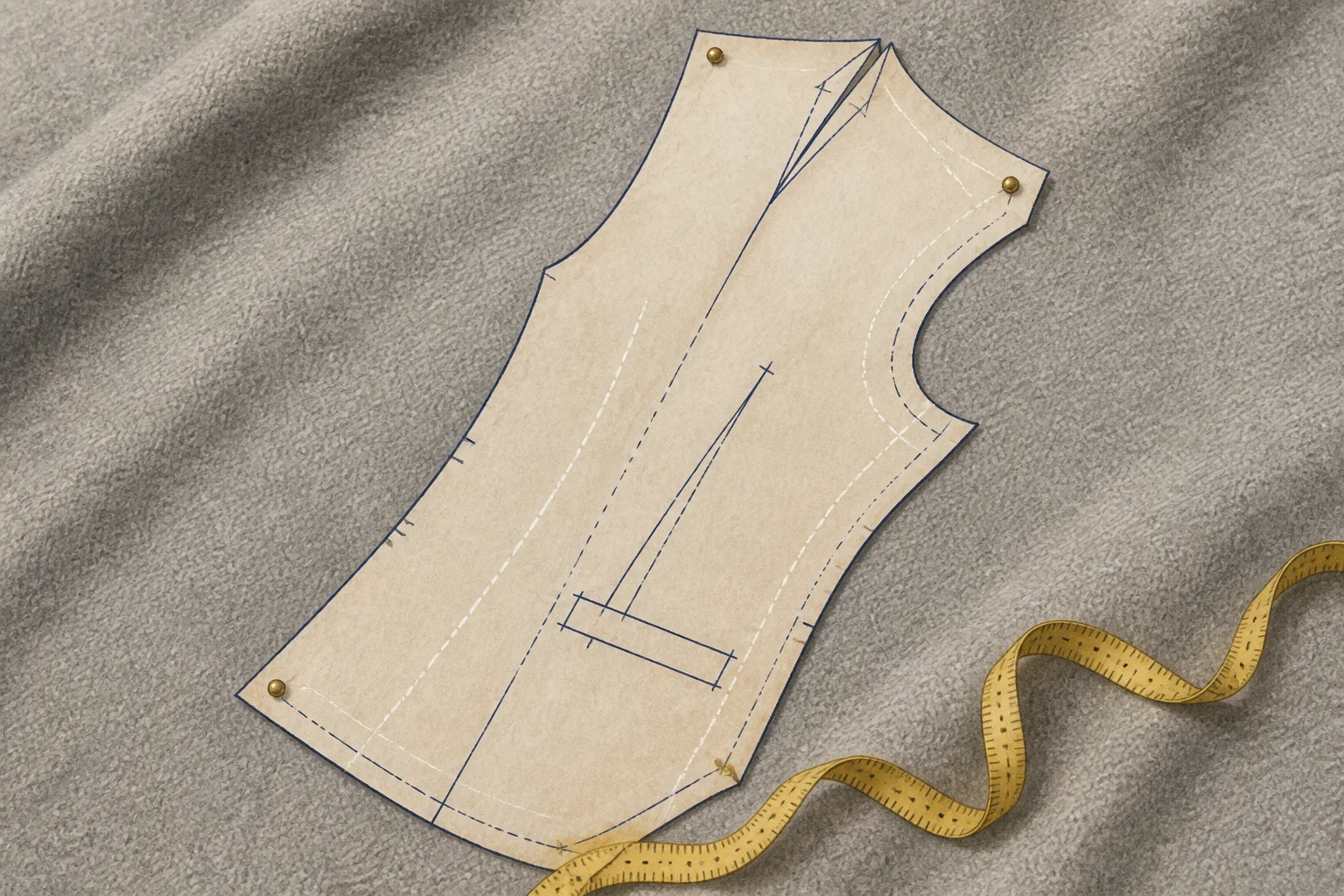
Layout: centered woven-label masthead (brand name reversed on a navy block with an inner dashed border), a small tilted size tag under it holding the page number and date. Hero is one large cream sheet: headline and deck on the left, an illustrated plate pinned at a slight angle on the right, and a full-width strip along the sheet's foot that shows the first intake question in large italic serif with a small gold label chip. Below: a rail of four fabric-swatch cards with zigzag pinked top edges that link to page sections, then numbered sections labeled FITTING 01 through 04, each opened by a dashed basting-stitch rule.

Components: commission sheet, swatch cards, size tag, stitch rules, a cutting-ticket panel for fine print. Section markers come from the fitting sequence, not icons.

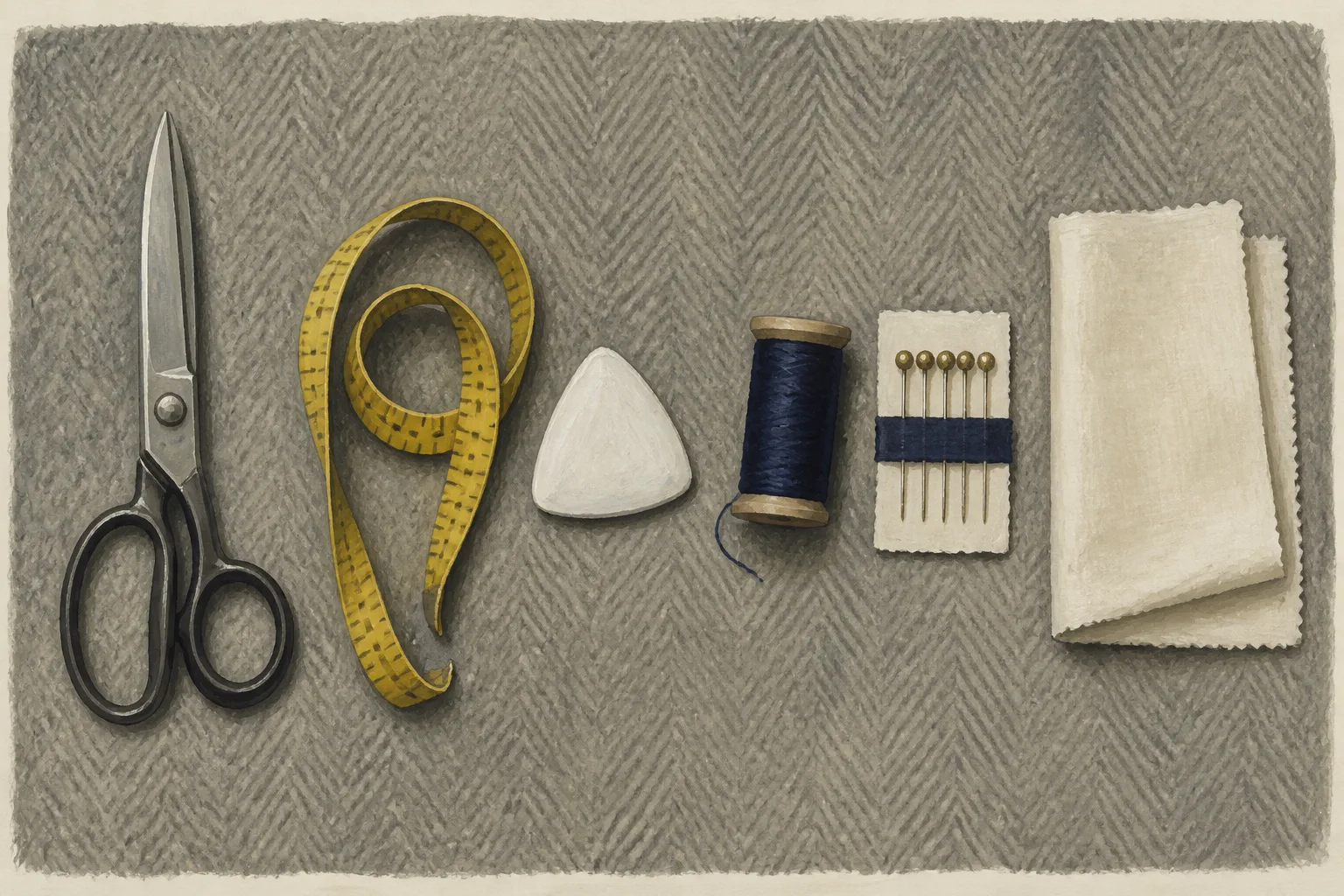
Imagery: gouache-and-chalk illustration plates of pattern pieces and workshop tools on wool, in the page palette. No legible text inside images.

Guardrails: body text at least 18px with 1.6 line height or better, WCAG AA contrast for all small text, no text baked into images, hover states on links and cards with 150ms easing, a prefers-reduced-motion guard, no neon, no dark mode, no pill-shaped buttons.
Beaver Builder AI will cut it to the measurements above; it also runs in Figma Make, v0, and Lovable.
Field note
Good client work has always billed for the questions, not the answers. The tools are catching on.
Sources
- Netlify changelogAgent Runners can now ask clarifying questions
- Framer updatesAgents: Reasoning and Fast Mode
- Duda product updatesDuda Vibe Levels Up with 6 New Updates
- shadcn/ui releasesshadcn 4.19.0
- CSS-TricksResolved: CSS Class Prefix Selector
- EarendilWhat is a Harness?