No. 097Workshop EditionThursday, August 13, 2026 ≈ 5 min
The model is the soul. The harness is suddenly the story.
DeepSeek shipped a harness where the models, tools, sandboxes, and even the UI are swappable plugins. Vercel's AI SDK will now take any runtime that speaks ACP. The layer nobody could name has become a parts catalog.
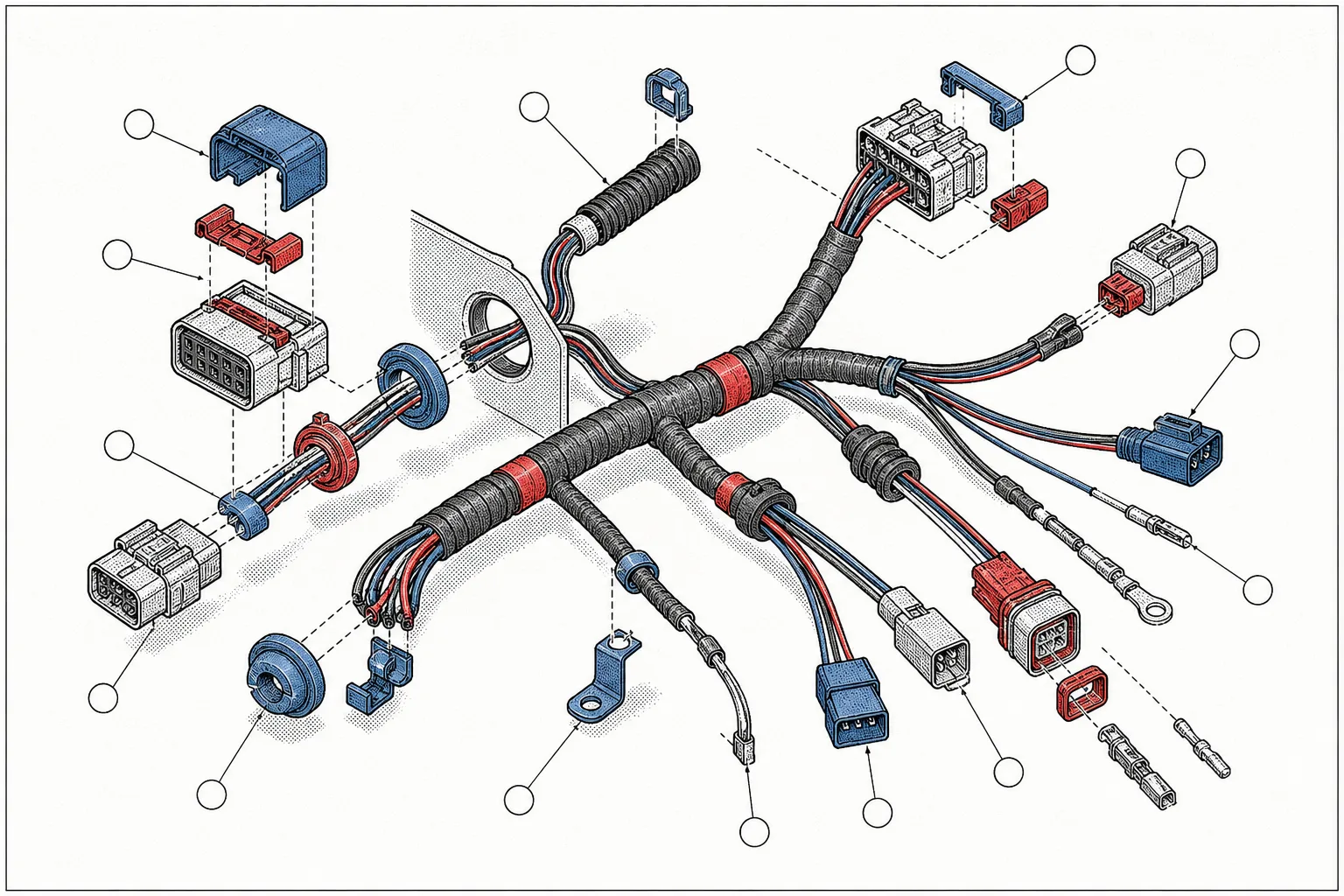
Fig. 1Universal harness kit, exploded view. Two-color plate, signal red and steel blue.
The developer preview of dsh runs every capability as a plugin on the Cordis kernel: models, tools, skills, sessions, sandboxes, storage, scheduling, even the web UI, all swappable in configuration without touching source. DeepSeek's docs put the thesis in one line, the model is the soul of an agent and the harness is what keeps it working in the real world. The MIT-licensed repo sits above 33,000 stars on announcement day.
The new meta adapter wraps the Agent Client Protocol instead of one specific runtime, so wiring a new coding agent into an app is a configuration block rather than a bespoke package. A second adapter built on it adds Grok Build, and it extends the pack-once logic that Agent Plugins applied to skills last week to the runtime itself.
Fitment guide: AI SDK HarnessAgent
Runtime
Fits via
Claude Code
Native adapter
Codex
Native adapter
Deep Agents
Native adapter
Grok Build
ACP meta adapter
OpenCode
Native adapter
Pi
Native adapter
Any ACP-compatible harness
ACP meta adapter
Source: Vercel changelog, Aug 13. Swap rows without changing application code.
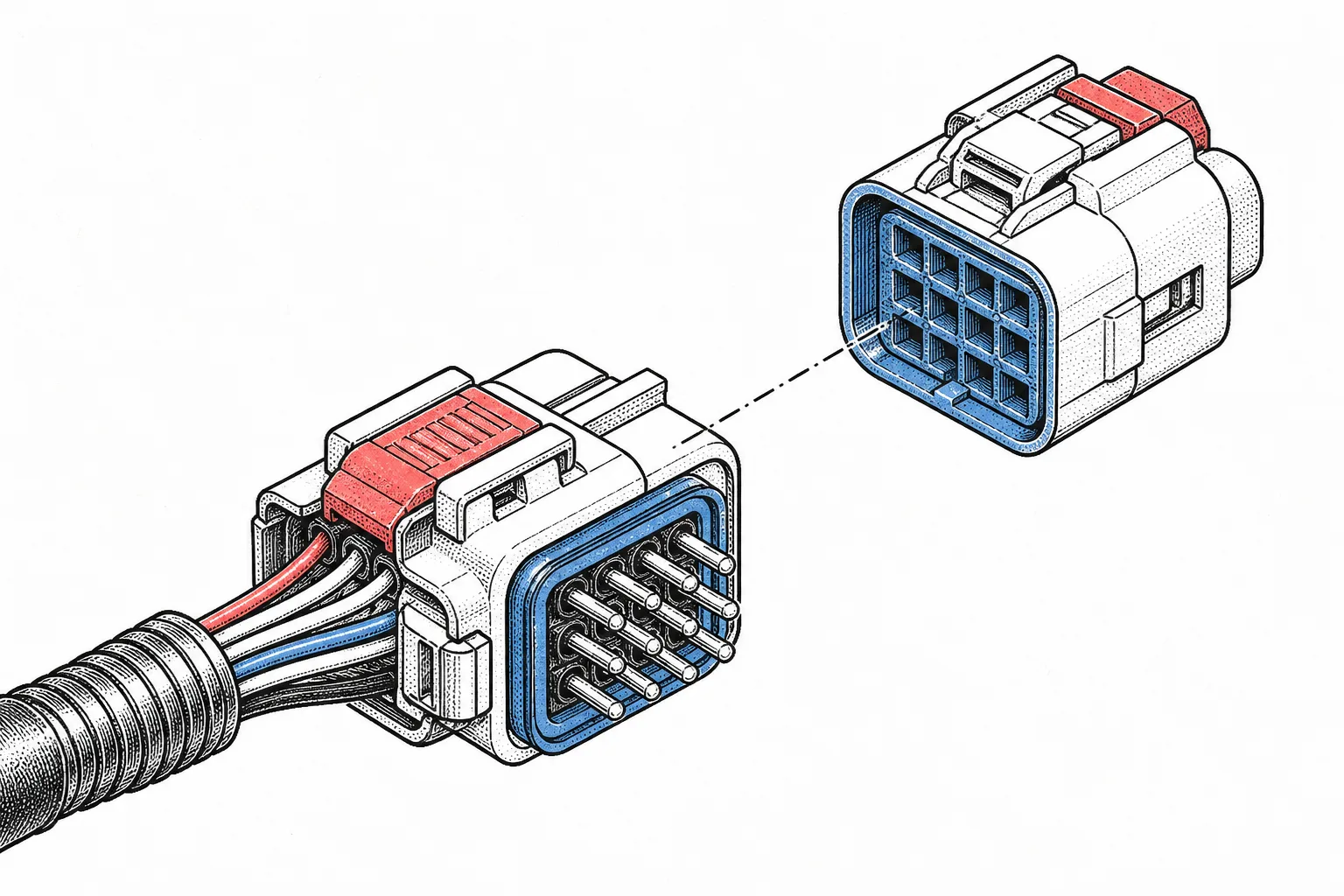
Fig. 2aMating faces. One protocol on both sides is the whole trick.
Skills are plain markdown files that carry the judgment calls a designer would otherwise repeat in every prompt, and Figma now lets you author them directly in the editor. Designer advocate Miggi Cardona shares ten worth copying, aimed at the same agent that answers from other apps' chat windows.
CSS-Tricks traces why the blocked aria-hidden console warning fires when a closed dialog strands screen reader focus, and why the blur and setTimeout workarounds that top the search results only silence the console while the hole in the page remains. The honest fix starts with the native dialog element and showModal.
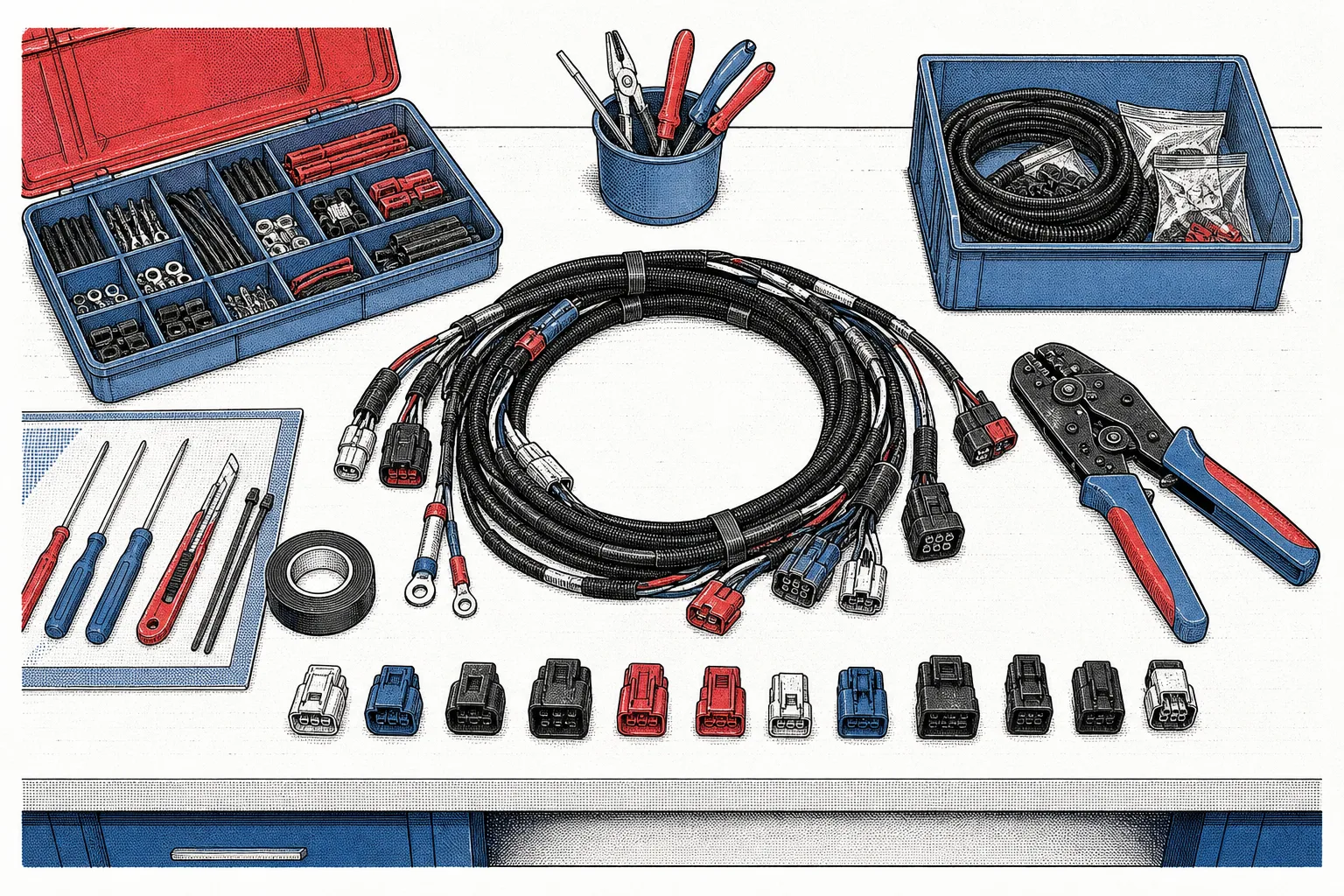
Fig. 3aBench setup. Every capability in its own bin.
Facing 1,000 open issues and nearly 800 open pull requests on a package with 20 million weekly downloads, the AI SDK team built an agent pipeline with human review as the accountability layer. Four weeks in, it authors 25 to 35 percent of merged PRs and closes 70 to 80 percent of issues.
Smashing Magazine summarizes the transparency obligations that took effect August 2: deepfakes and fully AI-written text on matters of public interest must be labelled, users must be told when they are talking to a machine, and the rules reach any company with users in the EU.
Webflow's security team argues the riskiest AI-built apps are the internal ones that ship with real IAM roles and no ticket filed, then lays out a baseline of platform controls, review gates, and detection for what slips through anyway.
Borrow this pattern
The figure key as table of contents
Run a numbered key strip under your hero image, the way a repair manual keys its exploded views, and make each numbered entry a real anchor link to a section of the page. The illustration stops being decoration and becomes the navigation. It suits any product page whose hero is a diagram, floor plan, kit photo, or annotated cutaway.
What keeps it honest: visible numbers rather than hidden hotspots, entries that are plain text links so screen readers and search engines get the same index a scanning eye does, and focus states on every entry. If the hero image fails to load, the key still works, because the key is the content.
Fig. 05
Prompt Lab
Today's order ticket recreates the workshop-manual parts page: the cover band, the keyed exploded hero, the fitment chart, and the caution plate.
Build a one-page product landing page for an automotive wiring
harness kit, art directed as a printed workshop manual.

Structure: a thin top nav; a full-width signal-red cover band
holding a large edition number in tall condensed type, an edition
label, and a date line; a full-width headline in condensed gothic
caps, ink black with one phrase in red; a framed hero plate
containing an exploded isometric diagram of the product; directly
beneath it, a numbered figure key where every entry is a real
anchor link to a page section. Then sections labeled like manual
figures (Fig. 02, Fig. 03) with hairline rules and part-number
suffixes: product items with linked headlines, a fitment table
with runtime rows and adapter chips, a caution plate with a
labeled tab on a 2px border, and an order-ticket panel with a
dashed tear-off top border for the checkout or contact block.

Palette: cool paper white #F5F6F3, plate white #FFFFFF, ink black
#191C20, signal red #BE2A21, steel blue #34527A, gray #5B6570.
Type: League Gothic for display in caps, Source Sans 3 for body,
IBM Plex Mono for labels, captions, part numbers, and table
headers.

Illustration: two-color technical ink-line art with signal red
and steel blue spot fills and halftone shading on white, framed
in bordered plates with mono figure captions. No legible text
inside images.

Guardrails: body text at least 18px with 1.7 line height and a
line length near 70 characters; WCAG AA contrast for small
labels; square corners or radii under 8px; no glow shadows, no
gradient text, no fake search fields or toggles; hover and focus
states on links, key entries, and table rows with 150ms easing
and a prefers-reduced-motion guard.
Order fills in Beaver Builder AI, plus v0, Figma Make, or Lovable.
Field Note
The garage lent software the word years ago: a harness is the loom of wiring that connects every part of the car to every other part, anonymous until it fails. This week the borrowed word got what every real part eventually gets, a catalog page and competing suppliers.