Local and long-distance moves · Free estimate below
Cursor's Origin puts repos, pull requests, and resident coding help at one address, with two-way GitHub sync while you pack. Vercel connected the utilities the same morning.
Today's art direction
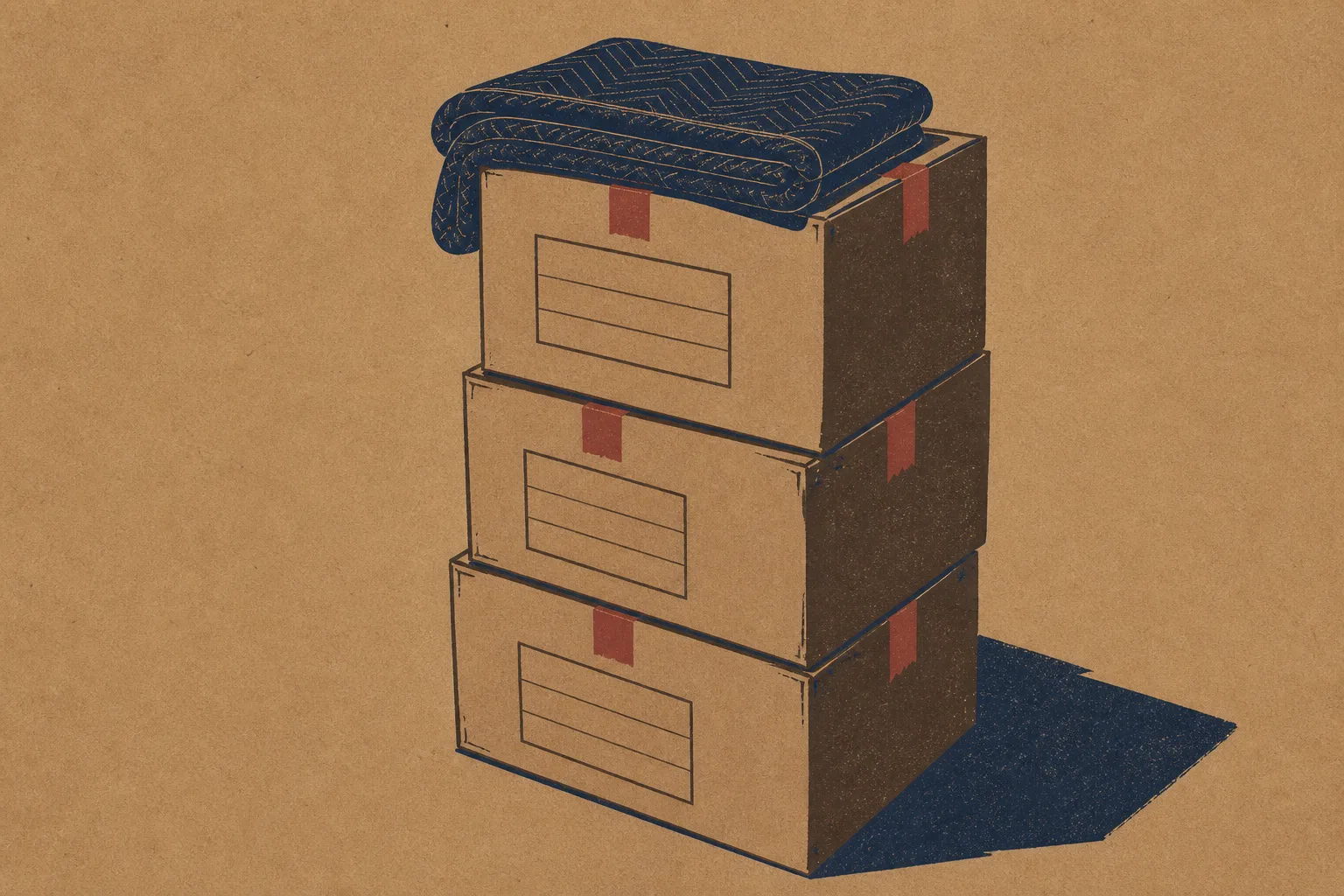
A moving company's landing page on kraft cardboard, with a packing-tape masthead and a manifest of what transfers.
Moving companies sell a nervous customer one thing: nothing gets lost. That is also what a code host has to sell you on moving day, so the day's page borrows the mover's grammar. The masthead is a strip of printed packing tape, sections are numbered inventory lots, the security story wears a FRAGILE stamp, and the centerpiece is a transfer manifest that says plainly what rides in the truck and what you carry by hand. Three screenprint plates share one kraft-and-ink treatment.
Cursor rolled out Origin, code hosting inside the editor, in early beta for every paid plan. Repos live in a new Codebase tab, existing GitHub repos sync both ways in real time, and pull requests carry their timeline, checks, and comments to either side of the move.
Vercel signed on as the first utility hookup: a public beta that deploys Origin repositories, with pull requests generating Preview deployments and merges going straight to production.
The timing wrote its own caption. GitHub spent part of the day in an incident, while the weekend's most-shared essay argued that GitHub has alternatives but no replacement. Origin is the first alternative built around the crew doing the work rather than the warehouse holding it.
| Moves automatically | You carry this |
|---|---|
| Repositories, with two-way GitHub sync while both houses stay liveCodebase tab · early beta, paid plans | Issues, projects, and discussions, which stay behind at GitHubNo migration path announced |
| Pull requests, including timeline, checks, and commentsSynced to either side | CI beyond the launch partnersDepot and Buildkite ship day one |
| Resident coding agents, already unpacked in every repoBrowse and modify in place | Org permissions, branch rules, and audit trailsRebuild by hand |
| Preview and production deploys via VercelPublic beta, Pro tier | Fifteen years of muscle memoryNo sync available |
After years of rolling commits, llama.cpp cut its first tagged release, v0.1.0. If your models moved in with you after Muse Glimmer went off grid, the ground floor just got a version number.
Qwen 3.8 now ships a 27B size that scores 52 on Artificial Analysis, and Simon Willison's notes say it is excellent but defaults to wildly overthinking small questions. Benchmark it before it gets the spare room key.
CSS-Tricks argues a dark mode toggle needs exactly two states, and shows how light-dark() makes honoring the system preference the default rather than a third button.
Roboflow's testing calls GPT-5.6 Sol the strongest vision model OpenAI has shipped, and Vercel is running it at half price on AI Gateway for the next month. A cheap season for screenshot-reading review loops.
Wiz researchers walked an AI-generated Copilot Autofix through a CI/CD gap and into Snowflake's Jira. A crew that lives in your repos is also a crew someone can impersonate; the more residents your code has, the more the locks matter.
Andrew Moffat on why vetted AI code is hard to justify: reviewing a generated diff you did not write costs more attention than most teams budget for, and the fatigue compounds with every merge.
Borrow this pattern
A two-column table for any switch or migration landing page: one column for what moves automatically, one for what the customer carries by hand. It converts because it is honest. Every row names a real object with its caveat attached, instead of promising a painless move in prose.
Keep it under ten rows, set both columns in the same type size so the hard column is not whispered, and never bury the hardest row at the bottom. The pattern fits code hosts, CRMs, billing platforms, and any service where the customer's real question is what gets lost in the truck.
Hand this prompt to your page builder and it rebuilds the day's design system, with room in the truck for whatever your client sells.
Build a one-page landing page for a moving company, art directed like a mid-century van line as a household move for a codebase. Ground: kraft cardboard tan (#DCC49B) with a faint vertical corrugation line pattern; panels in warmer card (#E9D9B5) and cream manifest sheets (#F6EDD9); ink is dark walnut (#2C1F14); accents: moving-blanket indigo (#2C3F66) and tape red (#B03A28) used sparingly. Type: Archivo Black for display, Archivo for body (19px minimum, 1.65 line height), Saira Stencil One for box labels and section tags, IBM Plex Mono for meta. Masthead is a translucent packing-tape band with stenciled box-label meta (number, date, this-side-up). Sections open with numbered inventory lot tags on a tape rule. Centerpiece: a two-column transfer manifest table (moves automatically vs you carry this) on a cream sheet with ruled rows and a mono sub-caption per row. One callout wears a rotated stenciled FRAGILE stamp. Illustrations are flat three-ink screenprints on kraft (van, cartons, open box), each in a bordered plate with a figure caption. Square corners everywhere, no pills, no gradients, no glow; hover states on links and a reduced-motion guard on the one tape-unroll animation.
Runs in Beaver Builder AI, Claude Code, Figma Make, v0, or Lovable.
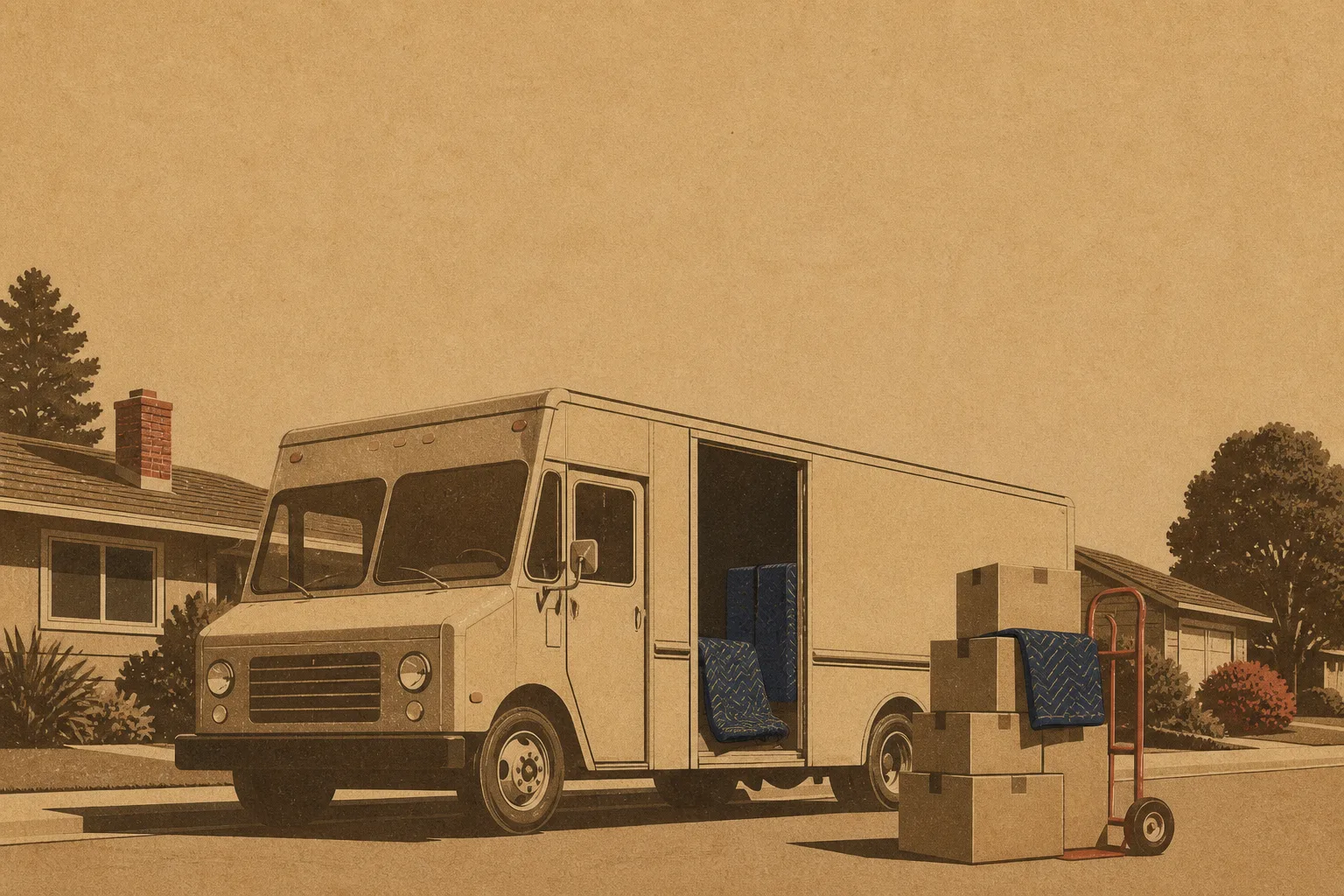
One hundred issues, one hundred moves. The work, every time, is the manifest: deciding what transfers automatically and what you carry across the threshold yourself.